
Microsoft Sculpt Ergonomic Mouse Review 2026: Is It Still Worth Buying?
I get asked about the Microsoft Sculpt line more often than almost any other ergonomic mouse, mostly because it has been around for over a decade and people assume that means it is either outdated or a safe bet. Neither answer is quite right. The Sculpt shape has genuinely aged well from a comfort standpoint, but the lineup itself has grown a bit confusing, with several similarly named models sold at different prices with different connectivity options.
This review looks at five current Sculpt and Sculpt-adjacent models, what actually separates them, and where each one falls short. I am not going to tell you the Sculpt mouse will fix chronic wrist pain, because no mouse can promise that. What I can tell you is how the design compares to a standard mouse, who it tends to suit, and who is probably better off looking elsewhere.
Quick Answer
Best Overall: Microsoft Sculpt Ergonomic Mouse (L6V-00001),the most balanced shape, price and reliability in the lineup. Best Lightweight Alternative: Microsoft Sculpt Ergonomic Mouse (L6V-00002), a near-identical wireless variant with one extra button and a lighter build. Best Budget: Microsoft Ergonomic Mouse (wired, RJG-00001), a corded option under $50 with a simpler ergonomic angle. Best for Multi-Device Switching: Microsoft Sculpt Wireless Ergonomic Mouse (L6V-00003)- dual USB/Bluetooth-style pairing with a longer 10-meter range. Best Compact/Ambidextrous: Microsoft Sculpt Comfort Mouse (H3S-00001, ambidextrous Bluetooth), smaller footprint with a customizable touch tab. Best for Right-Handed Precision: Microsoft Sculpt Comfort Mouse (H3S-00001, right-handed Bluetooth), BlueTrack sensor tracking with a touch tab, built specifically for right-hand use. Best Premium/Modern: Microsoft Bluetooth Ergonomic Mouse (Matte Black, 222-00001), updated materials, a machined scroll wheel, and long battery life.🖱️Best Microsoft Sculpt Ergonomic Mice 2026
Seven current Sculpt-line mice compared at a glance. Full reviews, limitations and who each one suits are below.


Quick Verdict Table
| Product | Best For | Main Strength | Main Limitation | Rating | Link |
|---|---|---|---|---|---|
| Sculpt Ergonomic Mouse (L6V-00001) | All-round office use | Balanced comfort and price | Ambidextrous shape, less ideal for lefties despite the label | 4.4/5 | View |
| Sculpt Ergonomic Mouse (L6V-00002) | Lighter wireless alternative to L6V-00001 | One extra button, about 1 oz lighter | Nearly identical to L6V-00001, easy to confuse when comparing | 4.0/5 | View |
| Ergonomic Mouse Wired (RJG-00001) | Budget buyers, no batteries wanted | Low cost, corded reliability | Less pronounced ergonomic curve than the Sculpt shape | 4.5/5 | View |
| Sculpt Wireless Ergonomic Mouse | Multi-device switching | 10-meter range, dual connectivity | Highest price in the lineup | 4.4/5 | View |
| Sculpt Comfort Mouse (Ambidextrous Bluetooth) | Smaller hands, tablet pairing | Compact, customizable touch tab | Fewer buttons than the full Sculpt shape | 4.3/5 | View |
| Sculpt Comfort Mouse (Right-Handed Bluetooth) | Right-handed users wanting BlueTrack precision | BlueTrack sensor, works on more surface types | Right-handed only, priced higher than the ambidextrous version | 4.2/5 | View |
| Bluetooth Ergonomic Mouse (Matte Black) | Users who want newer materials | Aluminum wheel, up to 15-month battery life | Right-handed only, price varies by color/finish | 4.3/5 | View |
Introduction
If you spend most of your day on a computer, there is a decent chance you have already felt that dull ache along the outside of your wrist or forearm by mid-afternoon. A standard mouse forces the forearm into a fully pronated position, palm flat, facing straight down; for hours at a stretch, and for a lot of people that position simply is not comfortable over a full workday.
The Microsoft Sculpt line was built around a different idea: tilt the mouse, curve the body, and let the hand rest in something closer to a natural handshake angle instead of a flat-down grip. It is not a new concept anymore, but it has held up, and Microsoft has kept selling variations of it for well over a decade because the shape genuinely works for a lot of hand types.
This guide compares the current Sculpt-family mice side by side so you are not stuck guessing which model number actually matches the features you want.
What to Look For Before You Buy (Buying Guide)
1. Connectivity type. The lineup mixes USB-receiver wireless, Bluetooth, and one fully wired model. Bluetooth models pair directly with a laptop with no dongle to lose, but a USB receiver can be more reliable in offices with a lot of wireless interference.
2. Hand orientation. Most Sculpt mice are labeled ambidextrous, but the thumb scoop and right-side button placement genuinely favor right-handed use. Left-handed users should read the hand-orientation spec carefully rather than assuming “ambidextrous” means a true mirror-image fit.
3. Battery type and life. Some models take AA batteries, others AAA, and the newer Bluetooth model claims up to 15 months per set. If you dislike managing batteries, this is worth comparing before you buy rather than after.
4. Button count and programmability. Button count ranges from two on the basic wired model up to six on the newer Bluetooth Ergonomic Mouse. More buttons help if you rely on shortcuts, but they add nothing if you never use them.
5. Size and hand fit. Emily Richardson’s recommendation: measure your palm width before choosing between the full-size Sculpt shape and the more compact Comfort model, since a mouse that is too large or too small for your hand tends to force awkward wrist angles no matter how good the underlying design is.
6. Desk and grip habits. A curved, tilted mouse changes your wrist angle, but it also changes how your hand rests when idle. If you frequently switch between mouse and trackpad, or share a workstation, a more neutral-shaped mouse may involve less of a relearning period.
7. Software and compatibility. Some of these models are optimized around older Windows button layouts. Check current compatibility with your operating system, especially on macOS or Chrome OS, since features like the Start-screen button may not translate the same way.
8. Price versus how much you’ll actually use it. The price gap between the cheapest and most expensive model here is close to $90. That is only worth paying if the extra range, battery life or build materials actually matter for how you work.
Understanding Wrist Position and Why Shape Matters
A vertical or tilted ergonomic mouse is designed to keep the forearm closer to a neutral, thumbs-up-ish orientation rather than the fully palm-down position a flat mouse requires. The Sculpt shape is a moderate version of this, it tilts the hand roughly 30 to 40 degrees rather than the near-90-degree tilt you get from a fully vertical mouse like the Logitech MX Vertical.
Research Insight: A peer-reviewed study in the journal Work, led by researchers at the University of Washington School of Public Health, tested flat, angled and fully vertical mouse designs against each other. It found that increasing mouse height and angling the mouse body reduced forearm pronation compared with a flat mouse, with no loss of pointing accuracy, while the fully vertical design reduced pronation the most but scored worst on pointing performance of the group tested.
What this means: the Sculpt’s moderate tilt sits in the same general range this research associates with reduced pronation alongside preserved pointing accuracy, which lines up with its design goal. That said, this is general research into mouse geometry from a small sample of users, not a clinical test of the Sculpt mouse specifically, and it says nothing about longer-term outcomes like carpal tunnel syndrome.
OSHA’s Computer Workstations eTool recommends keeping hands, wrists and forearms straight and roughly parallel to the floor as part of a neutral working posture, and its pointer and mouse guidance specifically notes that an awkward wrist posture at the mouse, held for prolonged periods, can contribute to musculoskeletal strain. NIOSH’s ergonomics guidance takes a similar position: fit the equipment to the person rather than expecting the person to adapt to a fixed setup.
Practical example: if your wrist bends outward or flattens completely every time you reach for your mouse, that’s the posture this research is describing. Testing whether a moderate tilt like the Sculpt’s, or a steeper angle like the Logitech MX Vertical, reduces that bend for your specific hand is more useful than assuming either one will fix discomfort on its own.
What this means in practice: a moderately tilted shape like the Sculpt may feel more comfortable for some users during long sessions, but it is a comfort and positioning tool, not a treatment. If you are dealing with ongoing wrist, hand or forearm pain, a mouse change is worth trying alongside — not instead of — advice from an appropriate healthcare professional.
If you are still deciding between a moderate tilt and a full vertical grip, our vertical mouse vs trackball comparison breaks down the tradeoffs in more depth.
Product Reviews
1. Microsoft Sculpt Ergonomic Mouse (L6V-00001); Best Overall
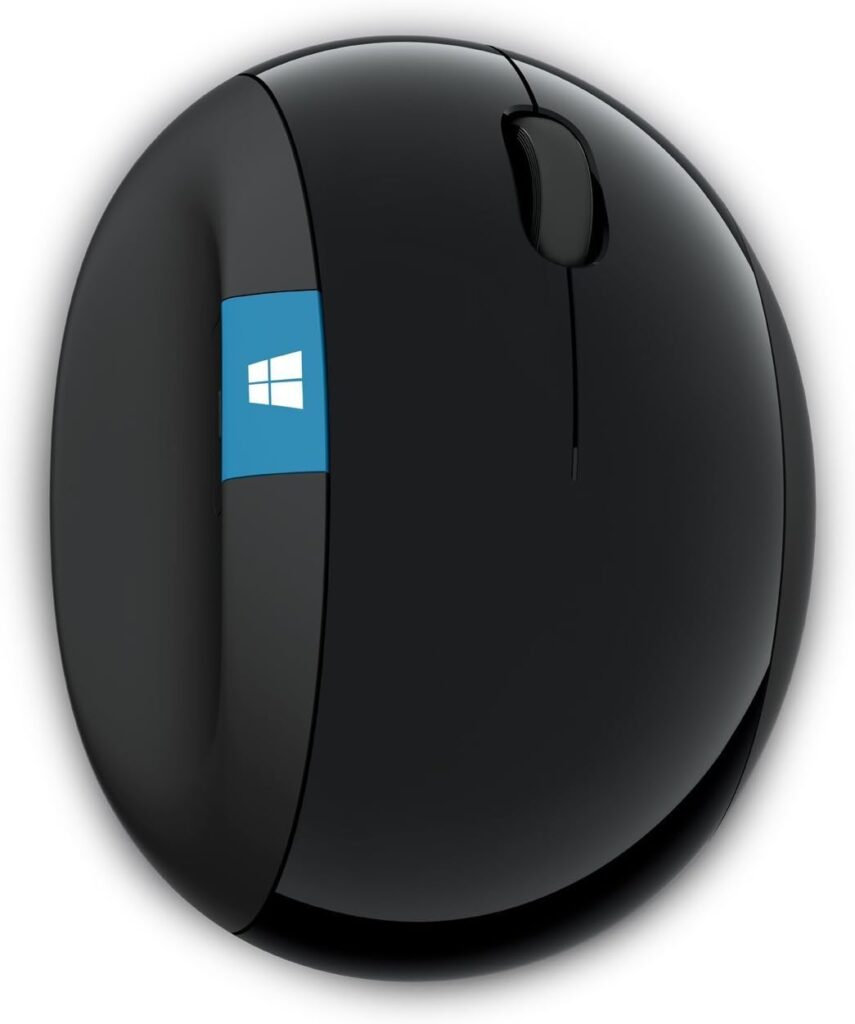
Quick Verdict: This is the model most people mean when they search for the Sculpt mouse, and it earns the “best overall” spot by being the most complete package at a fair price. The curved body, thumb scoop and 4-way scroll wheel cover the core ergonomic features without pushing the price toward the premium end of the lineup.
Best For: Office workers and remote employees who want the classic Sculpt shape without paying for extras like extended Bluetooth range.
Key Specifications
- Connectivity: USB wireless receiver
- Sensor: Optical
- Buttons: 3
- Hand orientation: Ambidextrous (right-hand-favoring in practice)
- Batteries: 2 AAA (included)
- Weight: 8 ounces
- Dimensions: 5.51″L x 3.87″W
What We Like
- Thumb scoop keeps the thumb in a more relaxed position during extended sessions
- 4-way scroll wheel adds left/right scrolling for wide spreadsheets and documents
- Reasonably priced for a dedicated ergonomic shape
What We Don’t Like
- Only 3 buttons, which limits shortcut customization compared with the Bluetooth Ergonomic Mouse
- USB receiver means one more thing to keep track of if you travel with it often
Ergonomic Analysis: The tilted body and thumb scoop work together to reduce how flat your palm has to sit, which some users find noticeably more comfortable during multi-hour sessions. The tradeoff is a slightly larger footprint than a standard mouse, so check your available desk space first.
Who Should Buy It? Anyone who wants a proven, mid-priced ergonomic shape for daily office or home-office use.
Who Should Skip It? Left-handed users who want a true mirror-image fit, and anyone who specifically needs Bluetooth rather than a USB receiver.
Value for Money: At around $76, this sits in a fair middle ground, noticeably more than a basic wired mouse, but well below the premium wireless model in this lineup.
🛒 Check Price on AmazonA near-identical wireless variant, the L6V-00002, is also sold under the Sculpt name with a slightly different button count and receiver setup. Specifications can vary by model or region, so confirm current listing details before purchasing if you are comparing the two.
2. Microsoft Ergonomic Mouse (Wired, RJG-00001); Best Budget Option
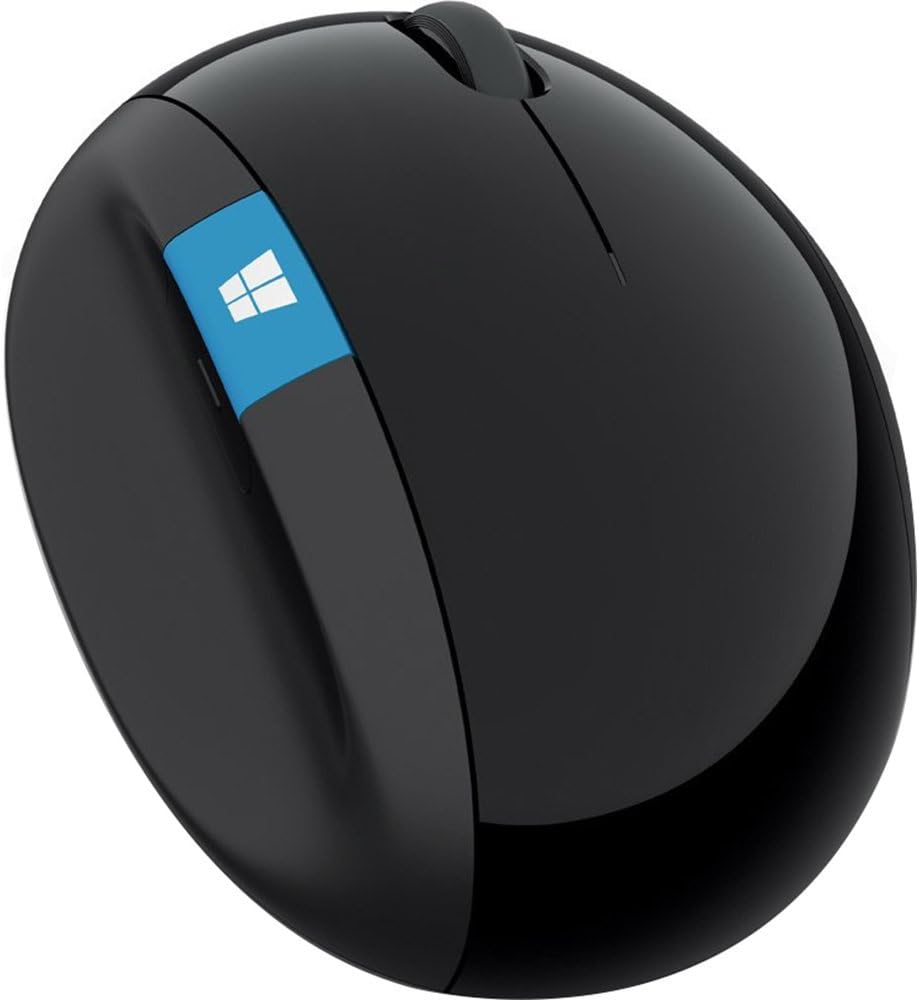
Quick Verdict: This is the simplest, least expensive option here, and it makes sense for anyone who wants a gentler ergonomic curve without spending on wireless features or a full Sculpt-style tilt. It is wired, so there is no battery to manage and no receiver to lose.
Best For: Budget-conscious buyers, students, or anyone who prefers a corded mouse for reliability.
Key Specifications
- Connectivity: USB, wired
- Sensor: Laser
- Buttons: 2 programmable
- Hand orientation: Right-handed
- Power: Corded electric
- Weight: Not listed by manufacturer at time of writing
What We Like
- Lowest price point in the Sculpt-adjacent lineup
- No batteries or pairing required
- Laser sensor tracks reliably on a range of desk surfaces
What We Don’t Like
- Ergonomic curve is noticeably less pronounced than the full Sculpt shape
- Only 2 programmable buttons, fewer than every other model reviewed here
- Right-handed only, with no ambidextrous claim
Ergonomic Analysis: This model leans on general comfort shaping rather than the aggressive thumb-scoop tilt of the true Sculpt line. It is a reasonable entry point if you are curious about ergonomic mice but not ready to commit to a more dramatic shape change.
Who Should Buy It? Anyone who wants a low-cost, no-fuss ergonomic mouse and does not mind a cable.
Who Should Skip It? Users who specifically want the pronounced tilt and thumb scoop that define the Sculpt shape, this model is a lighter take on the concept.
Value for Money: At under $50, it is a low-risk way to try an ergonomic shape before committing to a pricier wireless model.
🛒 Check Price on Amazon3. Microsoft Sculpt Wireless Ergonomic Mouse; Best for Multi-Device Switching
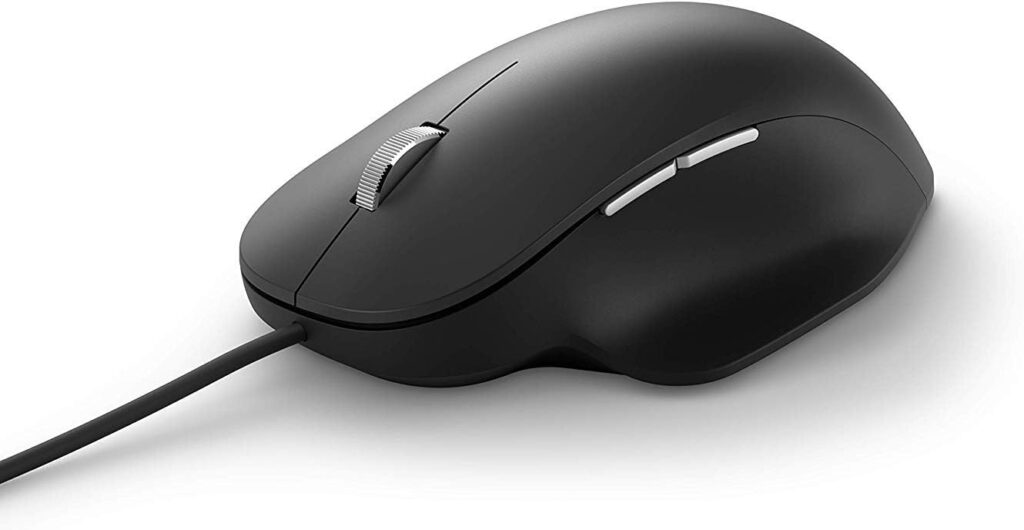
Quick Verdict: This is the priciest model in the lineup, and the extra cost buys you a 10-meter working range and support for both USB and wireless-style pairing. If you regularly move between a desktop, laptop, and a presentation setup, the added flexibility is the main selling point.
Best For: Professionals who switch between multiple devices or present from a distance.
Key Specifications
- Connectivity: USB and wireless
- Sensor: Optical
- Buttons: 4
- Hand orientation: Ambidextrous
- Batteries: 2 AAA (included)
- Range: 10 meters
What We Like
- Longest working range of any model in this review
- 4 buttons give more shortcut flexibility than the base Sculpt model
- Dual connectivity setup suits users who move between devices often
What We Don’t Like
- Highest price in the comparison at roughly $139
- Available product detail is thinner than for the other models, so double-check current specs before buying
- Bulk of the value depends on actually needing the extended range, which many desk-bound users will not use
Ergonomic Analysis: The ergonomic shape itself is very close to the base Sculpt model, so the comfort profile is similar. The real differentiator is functional range rather than a different wrist angle or grip.
Who Should Buy It? Users who present, teach, or work across multiple rooms and devices and want one mouse that follows them.
Who Should Skip It? Anyone working from a single fixed desk, where the extended range adds cost without a practical benefit.
Value for Money: This is the hardest model to justify on ergonomics alone. It earns its price through connectivity flexibility, not through a meaningfully different comfort experience.
🛒 Check Price on Amazon4. Microsoft Sculpt Comfort Mouse (Bluetooth, H3S-00001); Best Compact Option
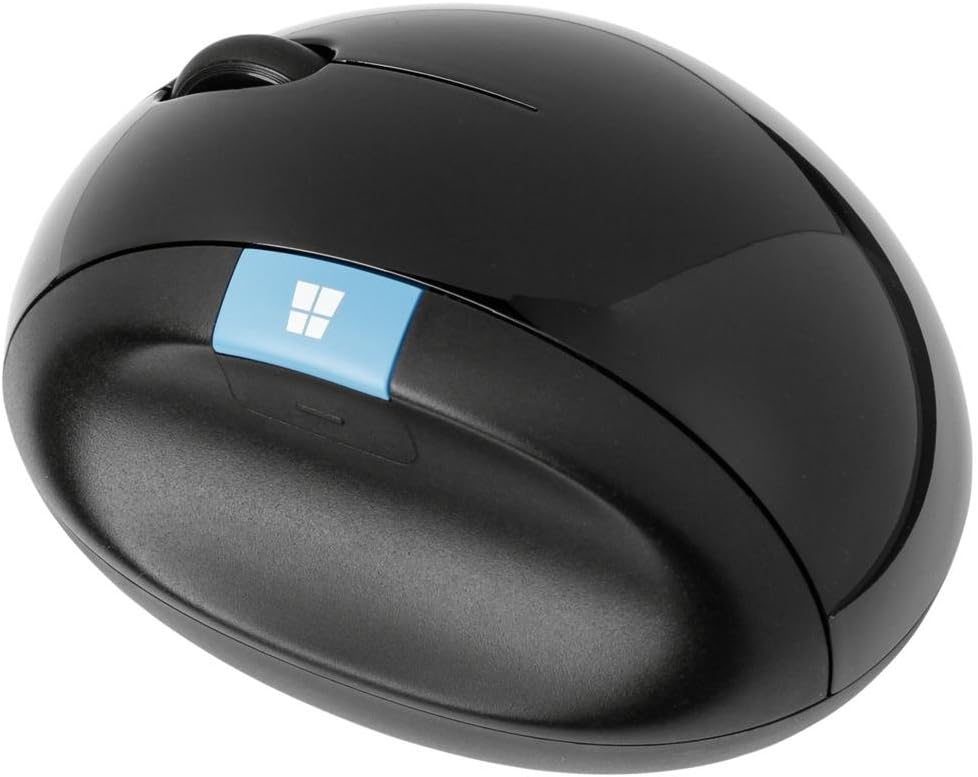
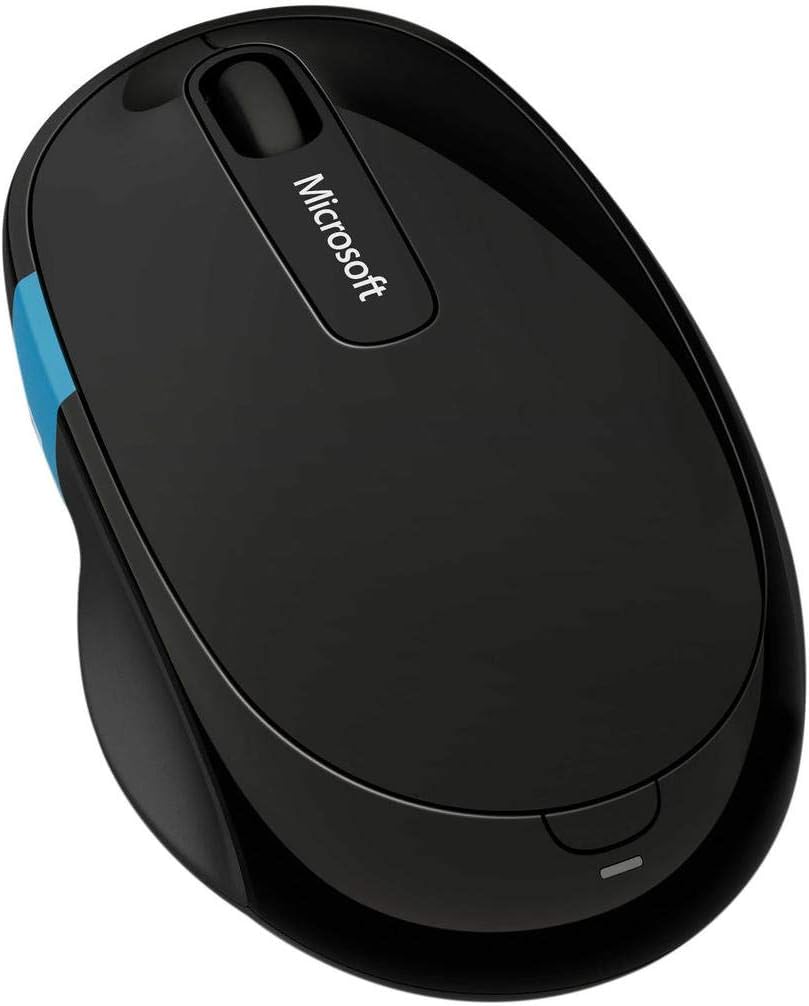
Quick Verdict: This is the most compact mouse in the review, built around a customizable Windows touch tab and Bluetooth pairing rather than a USB receiver. It suits smaller hands and users who want to pair directly with a laptop or tablet without carrying an extra dongle.
Best For: Smaller hands, tablet users, and anyone who prefers Bluetooth-only pairing.
Key Specifications
- Connectivity: Bluetooth
- Sensor: Optical
- Buttons: 5
- Hand orientation: Ambidextrous
- Batteries: 2 AA (included)
- Weight: 4.8 ounces
What We Like
- Noticeably lighter than the full-size Sculpt models, at just under 5 ounces
- Customizable touch tab adds quick access to apps and the Start screen
- Bluetooth pairing means no receiver to lose
What We Don’t Like
- Smaller shape means less palm support for users with larger hands
- A separate right-handed-only variant (H3S-00001, model H3S00001) is also sold under a very similar name, which makes comparison shopping confusing
- Touch tab customization depends on driver software that may not be actively maintained for newer operating systems
Ergonomic Analysis: The compact shape trades some of the deeper palm support of the full Sculpt line for portability and a lighter feel. For users with smaller or medium hands, that tradeoff can actually improve fit rather than reduce comfort.
Who Should Buy It? Users with smaller hands, frequent travelers, or anyone who wants Bluetooth pairing without a USB dongle.
Who Should Skip It? Larger-handed users who rely on full palm support during long sessions; the compact shape may feel cramped over time.
Value for Money: Pricing on this model has varied over time, so check the current Amazon listing. At a similar price to the base Sculpt mouse, it is a reasonable trade if portability matters more to you than maximum palm coverage.
🛒 Check Price on Amazon5. Microsoft Bluetooth Ergonomic Mouse (Matte Black, 222-00001); Best Premium/Modern Pick
Quick Verdict: This is the newest design in the lineup, and it shows. A machined aluminum scroll wheel, a Teflon glide base, and a claimed 15-month battery life put it a step above the older Sculpt models in build materials, even if the core ergonomic shape follows the same general philosophy.
Best For: Users who want updated materials and long battery life and don’t mind a right-hand-only design.
Key Specifications
- Connectivity: Bluetooth
- Sensor: Optical
- Buttons: 6, three customizable
- Hand orientation: Right-handed
- Batteries: 2 AAA (included), rated up to 15 months
- Materials: Aluminum and glass elements
What We Like
- Machined aluminum scroll wheel feels noticeably more premium than the plastic wheels on older models
- Long claimed battery life reduces how often you need to swap batteries
- Soft, easy-to-grip thumb rest supports a more natural hand position
What We Don’t Like
- Right-handed only, unlike the ambidextrous claims on older Sculpt models
- Pricing varies significantly by color and finish, from roughly $48 to over $90
- Materials and weight differ across color variants, so double-check the specific listing you’re buying
Ergonomic Analysis: The overall tilt angle is similar to the classic Sculpt shape, but the soft thumb rest and refined scroll wheel make extended scrolling and clicking feel less fatiguing in day-to-day use. This is more of a refinement than a redesign.
Who Should Buy It? Right-handed users who want the most current materials and the longest battery life in this comparison.
Who Should Skip It? Left-handed users, and anyone comparing purely on price, since some finishes cost noticeably more than the base Sculpt model.
Value for Money: At the lower end of its price range, this is a strong value. At the higher end, it competes directly with premium mice outside the Microsoft lineup, so it’s worth comparing against our best wireless ergonomic mouse picks before deciding.
🛒 Check Price on Amazon</a6. Microsoft Sculpt Comfort Mouse (Right-Handed Bluetooth, H3S-00001); Best for Right-Handed BlueTrack Precision
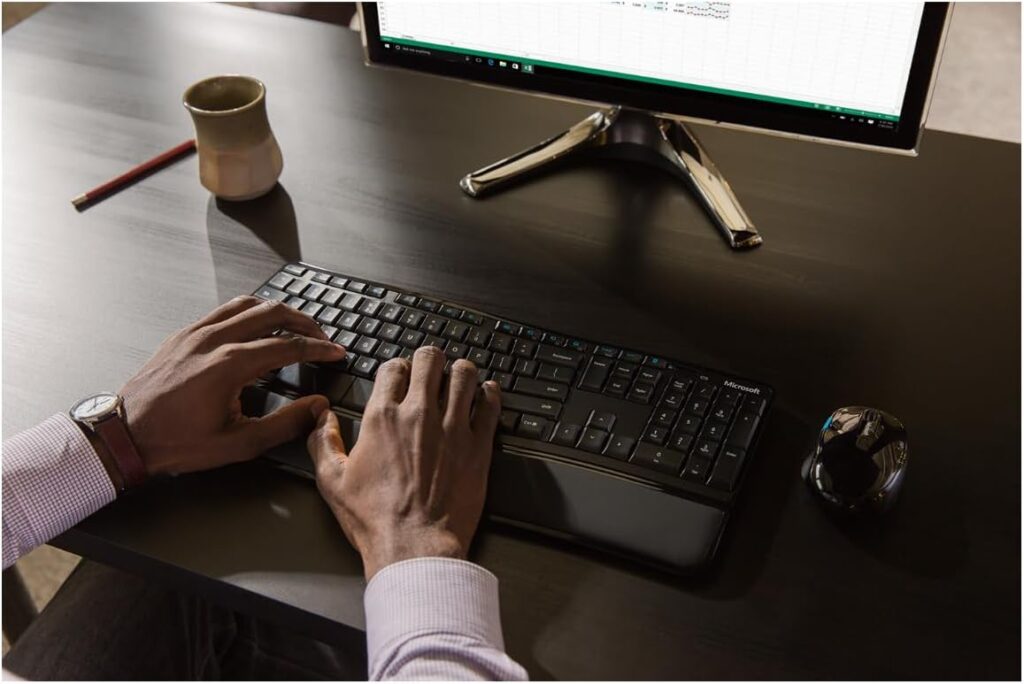
Quick Verdict: This is the right-handed-only sibling to the ambidextrous Sculpt Comfort Mouse above, sold under the same H3S-00001 model name but with a different ASIN, a dedicated right-hand shape, and Microsoft’s BlueTrack sensor instead of a standard optical one. It sits at a noticeably higher price than its ambidextrous counterpart.
Best For: Right-handed users who want a shaped grip plus a sensor built to track reliably on a wider range of desk surfaces.
Key Specifications
- Connectivity: Bluetooth
- Sensor: BlueTrack
- Buttons: Customizable Windows touch tab, plus scroll navigation
- Hand orientation: Right-handed
- Batteries: 2 AA (included)
- Weight: 4.8 ounces
What We Like
- BlueTrack sensor technology is built to track on more surface types than a standard optical sensor, including some glossy or textured desks
- Dedicated right-hand shape gives more contoured support than the ambidextrous version
- Customizable touch tab carries over from the rest of the Comfort line
What We Don’t Like
- Priced roughly $20 to $30 higher than the ambidextrous Sculpt Comfort Mouse for a similar feature set
- Right-handed only, with no ambidextrous or left-handed option in this specific listing
- Sharing the H3S-00001 model name with its ambidextrous sibling makes it easy to buy the wrong one by mistake
Ergonomic Analysis: The shaping is closer to a traditional contoured mouse than the fully symmetrical ambidextrous version, which can feel more supportive for right-handed users specifically, at the cost of losing the flexibility to switch hands.
Who Should Buy It? Right-handed users who specifically want BlueTrack surface tracking and don’t mind paying more for it.
Who Should Skip It? Left-handed users, anyone who shares a mouse between hands, and buyers who don’t need BlueTrack’s extra surface compatibility; the ambidextrous Comfort Mouse covers most of the same ground for less.
Value for Money: The price premium is hard to justify unless BlueTrack’s surface tracking specifically solves a problem you already have, such as using the mouse on glass or an unusually glossy desk./cu
🛒 Check Price on Amazon7. Microsoft Bluetooth Ergonomic Mouse (Matte Black, 222-00001); Best Premium/Modern Pick
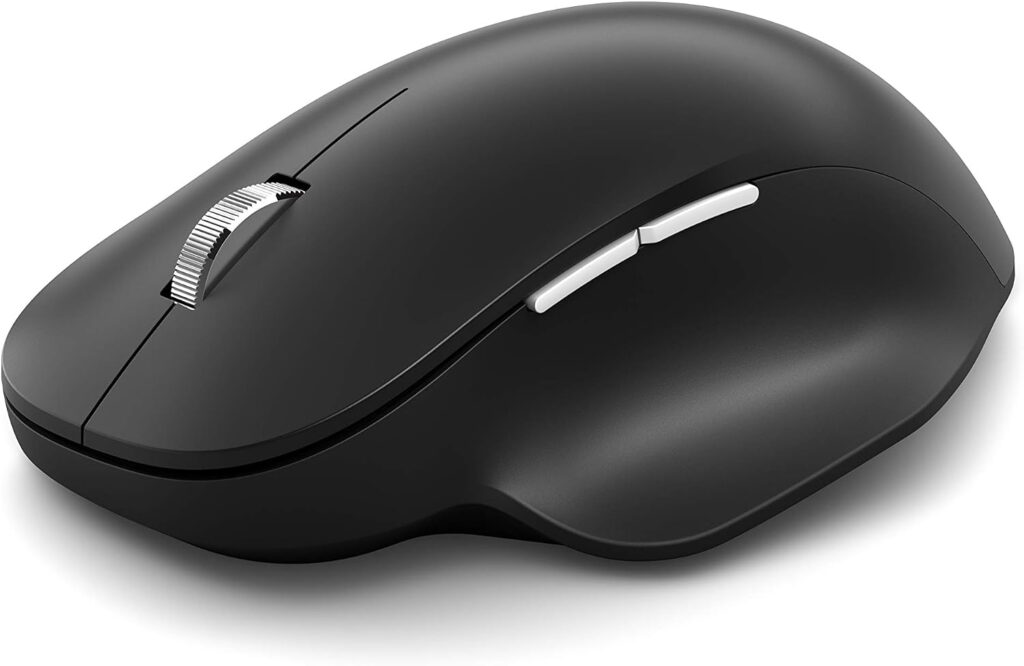
Quick Verdict: This is the newest design in the lineup, and it shows. A machined aluminum scroll wheel, a Teflon glide base, and a claimed 15-month battery life put it a step above the older Sculpt models in build materials, even if the core ergonomic shape follows the same general philosophy.
Best For: Users who want updated materials and long battery life and don’t mind a right-hand-only design.
Key Specifications
- Connectivity: Bluetooth
- Sensor: Optical
- Buttons: 6, three customizable
- Hand orientation: Right-handed
- Batteries: 2 AAA (included), rated up to 15 months
- Materials: Aluminum and glass elements
What We Like
- Machined aluminum scroll wheel feels noticeably more premium than the plastic wheels on older models
- Long claimed battery life reduces how often you need to swap batteries
- Soft, easy-to-grip thumb rest supports a more natural hand position
What We Don’t Like
- Right-handed only, unlike the ambidextrous claims on older Sculpt models
- Pricing varies significantly by color and finish, from roughly $48 to over $90
- Materials and weight differ across color variants, so double-check the specific listing you’re buying
Ergonomic Analysis: The overall tilt angle is similar to the classic Sculpt shape, but the soft thumb rest and refined scroll wheel make extended scrolling and clicking feel less fatiguing in day-to-day use. This is more of a refinement than a redesign.
Who Should Buy It? Right-handed users who want the most current materials and the longest battery life in this comparison.
Who Should Skip It? Left-handed users, and anyone comparing purely on price, since some finishes cost noticeably more than the base Sculpt model.
Value for Money: At the lower end of its price range, this is a strong value. At the higher end, it competes directly with premium mice outside the Microsoft lineup, so it’s worth comparing against our best wireless ergonomic mouse picks before deciding.
🛒 Check Price on AmazonComparison Table
| Product | Type | Key Ergonomic Feature | Weight | Connectivity | Rating |
|---|---|---|---|---|---|
| Sculpt Ergonomic (L6V-00001) | Wireless (USB receiver) | Thumb scoop + tilted body | 8 oz | USB | 4.4/5 |
| Sculpt Ergonomic (L6V-00002) | Wireless | Thumb scoop + tilted body | 6.9 oz | Wireless | 4.0/5 |
| Ergonomic Mouse (Wired) | Wired | Moderate curve | Not listed | USB cable | 4.5/5 |
| Sculpt Wireless | Wireless (USB + wireless) | Tilted body, 10m range | Not listed | USB / wireless | 4.4/5 |
| Sculpt Comfort (Ambidextrous) | Wireless (Bluetooth) | Compact tilt + touch tab | 4.8 oz | Bluetooth | 4.3/5 |
| Sculpt Comfort (Right-Handed) | Wireless (Bluetooth) | BlueTrack sensor + touch tab | 4.8 oz | Bluetooth | 4.2/5 |
| Bluetooth Ergonomic (Matte Black) | Wireless (Bluetooth) | Thumb rest + aluminum wheel | 3.21 oz | Bluetooth | 4.3/5 |
Which Sculpt Mouse Should You Buy? (Decision Framework)
Choose the Sculpt Ergonomic Mouse (L6V-00001) if: you want the classic, proven shape at a fair price and don’t need Bluetooth or extended range.
Choose the wired Ergonomic Mouse (RJG-00001) if: budget is your top priority and you don’t mind a lighter ergonomic curve and a cable.
Choose the Sculpt Wireless Ergonomic Mouse if: you regularly move between rooms, devices, or presentation setups and the 10-meter range is a genuine requirement.
Choose the Sculpt Comfort Mouse (Bluetooth) if: you have smaller hands, want a lighter mouse, or need Bluetooth pairing for a tablet or ultraportable laptop.
Choose the Bluetooth Ergonomic Mouse (Matte Black) if: you’re right-handed and want the newest materials and longest claimed battery life, and you’ve compared pricing across the available color options first.
If none of these quite fit, for example, if you want a more dramatic wrist-angle change, it’s worth reading our best vertical mouse roundup before committing to the Sculpt shape.
Common Mistakes When Buying an Ergonomic Mouse
- Assuming “ergonomic” automatically means comfortable for your specific hand size
- Buying based only on the star rating without checking hand orientation
- Ignoring desk space required by larger, curved mouse shapes
- Choosing a wireless model without checking whether it needs a USB receiver or supports Bluetooth
- Overlooking battery type and replacement cost over time
- Expecting a mouse alone to resolve ongoing wrist or forearm pain
- Not checking software compatibility with your specific operating system
- Comparing similarly named models (like the two H3S-00001 variants) without confirming the exact model number
Best Practices for Comfortable Mouse Use
- Keep the mouse close to your body rather than reaching forward for it, OSHA’s pointer and mouse guidance specifically flags a distant mouse as a source of shoulder and arm strain
- Position your monitor so your neck stays in a neutral, forward-facing position
- Adjust chair and desk height so your elbow sits at roughly a 90-degree angle
- Avoid resting your wrist on a hard desk edge while clicking or scrolling
- Take short movement breaks and change position periodically rather than staying static, in line with OSHA’s neutral-posture recommendations
- Alternate hands occasionally if your workflow allows it, to distribute strain
No single product replaces these habits, a well-shaped mouse works best alongside a properly set up desk.
Alternatives Worth Considering
If the Sculpt shape’s moderate tilt isn’t dramatic enough for you, a fully vertical mouse holds the hand at a much steeper angle. Our Logitech MX Vertical review covers how that design compares directly. For readers who prefer a stationary ball over a moving mouse, our vertical mouse vs trackball guide walks through which approach tends to suit which kind of desk setup.
Frequently Asked Questions
Is the Microsoft Sculpt Ergonomic Mouse good for wrist pain?
It may help some users feel more comfortable during long sessions because of its tilted, curved shape, but it is not a medical treatment and cannot cure or guarantee relief from wrist pain. If pain is persistent or severe, speak with a healthcare professional in addition to trying ergonomic equipment.
Is the Microsoft Sculpt mouse compatible with Mac?
Some Sculpt models list Mac OS compatibility in their specifications, but certain features, like the Windows Start button or touch tab, may not function the same way on macOS. Check the current listing for the specific model before buying if Mac compatibility is essential.
How long does the battery last on the Sculpt mouse?
Battery life varies by model. The base Sculpt Ergonomic Mouse uses 2 AAA batteries, while the newer Bluetooth Ergonomic Mouse claims up to 15 months per set. Actual battery life depends on usage patterns and can vary by individual unit.
Is the Sculpt mouse left-hand friendly?
Most Sculpt models are marketed as ambidextrous, but the thumb scoop and button placement are generally shaped for right-hand use. Left-handed users should look closely at hand-orientation specs, and may find a symmetrical mouse a better fit.
What is the difference between the Sculpt Ergonomic Mouse and the Sculpt Comfort Mouse?
The Sculpt Ergonomic Mouse is the full-size shape with a USB receiver option and a pronounced thumb scoop. The Sculpt Comfort Mouse is smaller, uses Bluetooth, and adds a customizable touch tab, making it lighter but with less palm support.
Does the Sculpt mouse work well for gaming?
It is designed for productivity and everyday office use rather than gaming. The optical sensor and button layout are built around navigation and comfort, not the fast tracking and high button counts many gaming mice offer.
Are ergonomic mice worth the extra cost compared to a standard mouse?
Peer-reviewed research comparing flat, angled and fully vertical mice found that increasing mouse height and tilt reduced forearm pronation without hurting pointing accuracy, which supports the general design idea behind ergonomic mice. That’s evidence for the concept, not proof that any single product will eliminate discomfort — the benefit still varies by hand size and grip style, so trying a shape before committing to a premium model is a reasonable, low-risk step.
Can the Sculpt mouse cause more strain if used incorrectly?
Any mouse, ergonomic or not, can contribute to discomfort if paired with poor desk height, an awkward monitor position, or long periods without breaks. The shape helps with wrist angle, but overall setup still matters.
Which Sculpt model has the most buttons?
The Bluetooth Ergonomic Mouse (Matte Black) has the most buttons in this comparison, with 6 total and 3 customizable. The base wired model has the fewest, with just 2.
Is it worth buying the more expensive Sculpt Wireless model over the base Sculpt Ergonomic Mouse?
Only if you specifically need the extended 10-meter range or plan to switch between multiple devices regularly. For a single, fixed desk setup, the base Sculpt Ergonomic Mouse offers a similar comfort profile at a lower price.
Final Verdict
If you want the single safest pick, the Microsoft Sculpt Ergonomic Mouse (L6V-00001) remains the best overall balance of comfort, price and reliability in this lineup. If price is your main concern, the wired Ergonomic Mouse (RJG-00001) is a sensible, low-risk starting point. For anyone who genuinely needs long-range wireless flexibility, the Sculpt Wireless Ergonomic Mouse earns its higher price. Smaller-handed users and tablet owners will likely prefer the Sculpt Comfort Mouse, while those who want the newest materials and best battery life should look at the Bluetooth Ergonomic Mouse in Matte Black, provided they’re right-handed.
None of these will single-handedly fix an uncomfortable workstation. Pair whichever one you choose with a properly adjusted desk, chair and monitor height for the best results.
Compare the latest prices and availability before making your decision, since Amazon listings and configurations can change.





