Best Footrest for Home Office 2026: 7 Top Picks Compared
🖥️🦶 Best Footrests for Home Office, 7 Top Picks
Each model below fits a different desk, chair or budget. Compare the picks quickly, then scroll down for the full reviews.


Buying Guide: What Actually Matters in a Footrest for Home Office Use
1. Height Range
This is the feature that takes priority. One that is too high pushes your knees above your hips, forcing the backs of your thighs into a cramped position. Too low and it becomes useless.
Many of the guidelines produced by general workplace organisations, including OSHA’s computer workstation resources, recommend a seated position in which feet are supported and knees bent to about a right angle. Your footrest need only bridge the distance between the seat of your chair and the floor.
Michael Bennett, an expert in workplace ergonomics and office-equipment advisor, advises evaluating fit and adjustability before considering ancillary features. Footrests require you to determine whether you need one specific to your height requirements and shop accordingly.
2. Adjustability: Layered, Tiered or Fixed
Stackable or tiered footrests such as the StepLively, ComfyInLove and GOOYIAM allow you to adjust height. An arched footrest such as the ErgoFoam, uses the contour of the device and the range of sizes available to your height. Adjustability is not always a bonus when layers are attached using strong adhesive or hook-and-loop fasteners that shift with active use.
3. Foam Firmness and Density
The comfort of a memory-foam footrest comes with the risk of compression during prolonged use. High-density foam offers a firmer option that retains its shape. Choose based on preference, as either can be found in both densities. Look to see if the listing specifically mentions the type of foam, as “premium sponge” is effectively a marketing term.
4. Footprint and Desk Space
Measure the space under your desk to ensure the size of the footrest you select fits. Those approximately 15.7″ square offer a broad surface, but may take up too much space if you have a small desk, particularly if you also have a dining chair, PC tower or other items stored there. Opt for something more compact for a home office.
5. Stability and Non-Slip Base
A footrest that rolls away with any movement is not worth the annoyance. Consider the texture of the surface of the footrest and the type of flooring where you plan to use it. Hardwood and tile floors offer far more grip than carpets.
6. Cover Material and Cleaning
Human feet, socks and even shoes come into contact with the cover material on a daily basis. A footrest that offers a removable, washable covering is a hygiene priority. Ensure the closure is metal, as plastic zippers tend to give way with repeated use and washing.
7. Movement Options
Some footrests have a built-in rocking motion feature, while others have a textured surface to encourage subtle movement. Both are intended to keep blood circulating in your feet and legs, encouraging the recommended limit of sitting for no more than an hour at a time. They are a bonus rather than a necessity and should not drive your purchase.
8. Price to Value
Under desk footrests in this guide range between roughly $17 and $41 on Amazon at the time of writing. Spending more does not always offer better value, though it may be worth splurging on size and density rather than brand.
Understanding Unsupported Feet at a Home Desk and Footrest Use (What This Guide Can and Can’t Do)
One of the most common issues people experience at a desk, whether it’s in an office or a home office, is not having one’s feet supported. The feet either hang off the edge or one has to balance on their toes after adjusting the height of the chair to make it comfortable. The issue arises from having a desk that’s too high, the chair being too high and not being able to lower it further, or having the desk arranged in a manner that didn’t take into account the ergonomics of the workplace. The cause of the discomfort is easily identified – the lack of support for the feet leads to pressure behind the thighs and the need to constantly lower oneself in the seat, which places strain on the back.
The question of the optimal height of a desk and the accompanying chair has been considered by the government. Specifically, the U.S. Occupational Safety and Health Administration’s eTool for computer workstations indicates that a chair seat that is too high can lead to the feet not being supported and the upper body moving forward to balance this out. The organization also has a checklist for the evaluation of a workstation, which states that feet should be “rest flat on the floor or are supported by a stable footrest.” Additionally, OSHA’s guidelines regarding positioning also mention a footrest as an option for supporting the legs when the height of the desk is fixed.
The situation with regard to home offices is similar to the one in the office environment, although it poses more challenges. More often than not, one has to work from a dining chair or a multipurpose desk that takes up the majority of the space. Furthermore, going lower to place one’s feet on the floor is no longer an option since the keyboard and the computer screen would be at an uncomfortable height.
In essence, the footrest helps prevent the legs from dangling under the table and taking a significant amount of pressure off the thighs by supporting the whole leg down to the knee. Moreover, using a footrest, one can lower the chair to alleviate the pressure on the back caused by the incorrect relative height of the desk and the chair.
While the footrest does help with some of the issues associated with sitting for long periods at a desk, it is not a cure-all for any of the problems that can arise. A footrest should not be considered as a substitute for a correctly made workstation, an appropriately positioned computer monitor, or regular physical activity. However, it can help take the pressure off the legs when the chair height has been adjusted to the point when the feet can no longer dangle comfortably. The most important characteristic of a footrest, from the perspective of a home office worker is that it should be stable and supportive; ideally, it should allow for the natural movement of the legs and be placed in such a way that the knees are not bent at a sharper angle than 90 degrees.
Product Reviews
1. ErgoFoam Adjustable Foot Rest (Best Overall)
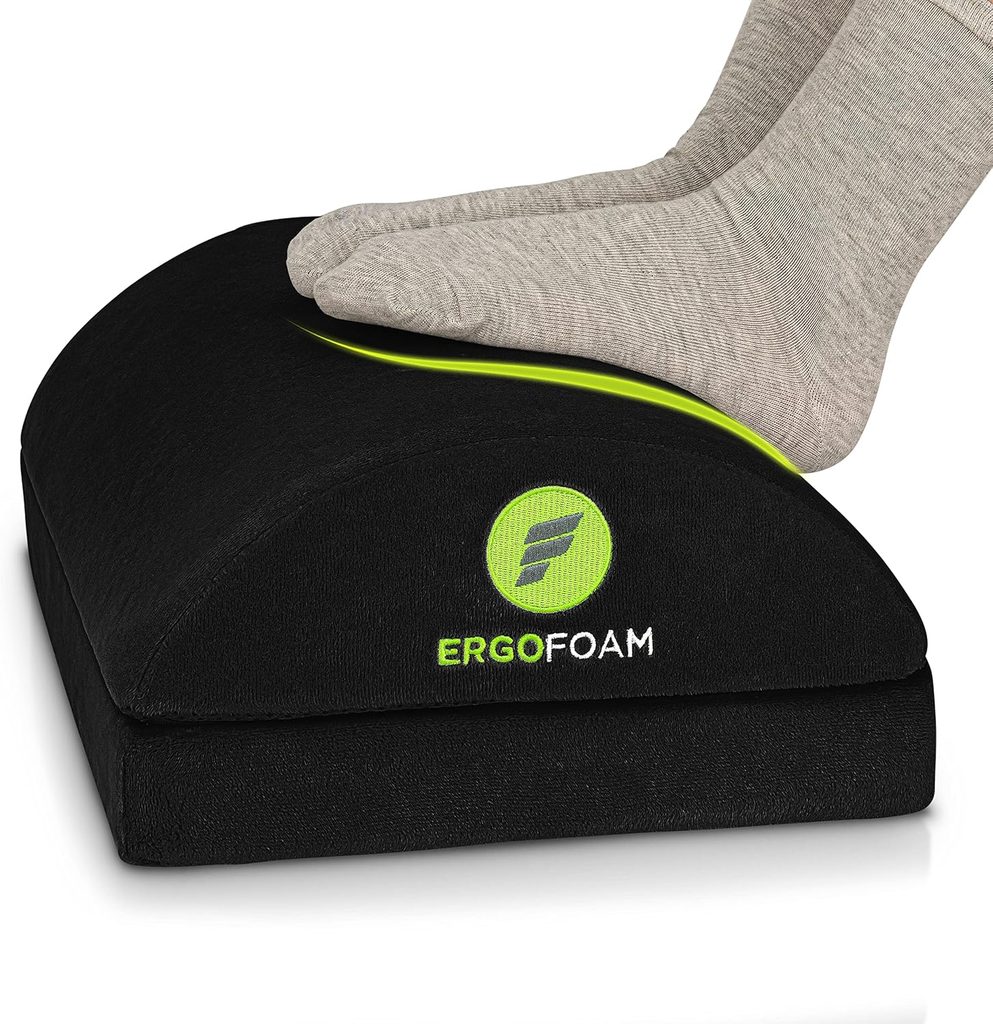
Quick Verdict: The ErgoFoam Is My Personal Recommendation due to its perfect combination of relatively firm yet arched wide design, as well as having the highest score in terms of reviews – 7,900+ with a 4.7 average on its listing. It may not be the cheapest option, but it could be the most recommended to someone who has not yet purchased a footrest due to the high level of comfort it was able to provide me.
Best For: Home office workers who want a firm, no-fuss footrest and may also want a rocker option.
Key Specifications:
- Dimensions: 17.3″ L x 11.5″ W x 5.9″ H (per listing)
- Weight: 0.7 kg (per listing)
- Material: high-density foam core with removable velvet cover
- Shape: semicircular arch, can be flipped to use as a rocker
- Double-sided non-slip bottom
- Lifetime warranty (per listing)
- Typical price: around $41 at the time of writing
What We Like:
- Firm foam designed to resist flattening over time, according to the manufacturer
- Wide, arched top gives feet room to shift position
- Doubles as a rocker for gentle foot movement
- Very large review volume makes the rating more reliable than most competitors
What We Don’t Like:
- Height range is limited compared with multi-layer options, and the listing’s “adjustable” wording depends on the variant you pick
- Priced above several similar foam footrests
- The listing uses strong marketing language, including health and endorsement claims, which we treat as manufacturer statements rather than proof
Ergonomic Analysis: The curved surface tilts your feet forward slightly rather than resting them horizontally on a shelf. This allows you to adjust the position of your ankles while sitting, and you won’t have to leave the footrest to do so. However, a firm foam footrest is important since it will start to lose its supportive properties when constantly exposed to pressure.
Who Should Buy It? People who want a dependable, durable-feeling footrest and are happy with a single main height. It also suits anyone who likes a rocking option.
Who Should Skip It? People who need a very tall footrest, or who want to adjust height in several steps. Those buyers will do better with a tiered model.
Value for Money: At roughly $41, it costs more than the budget picks. The review volume, firm construction and warranty make that price easy to justify for daily use.
Check Price on Amazon2. StepLively 2-Height Foot Rest: Best Budget Option
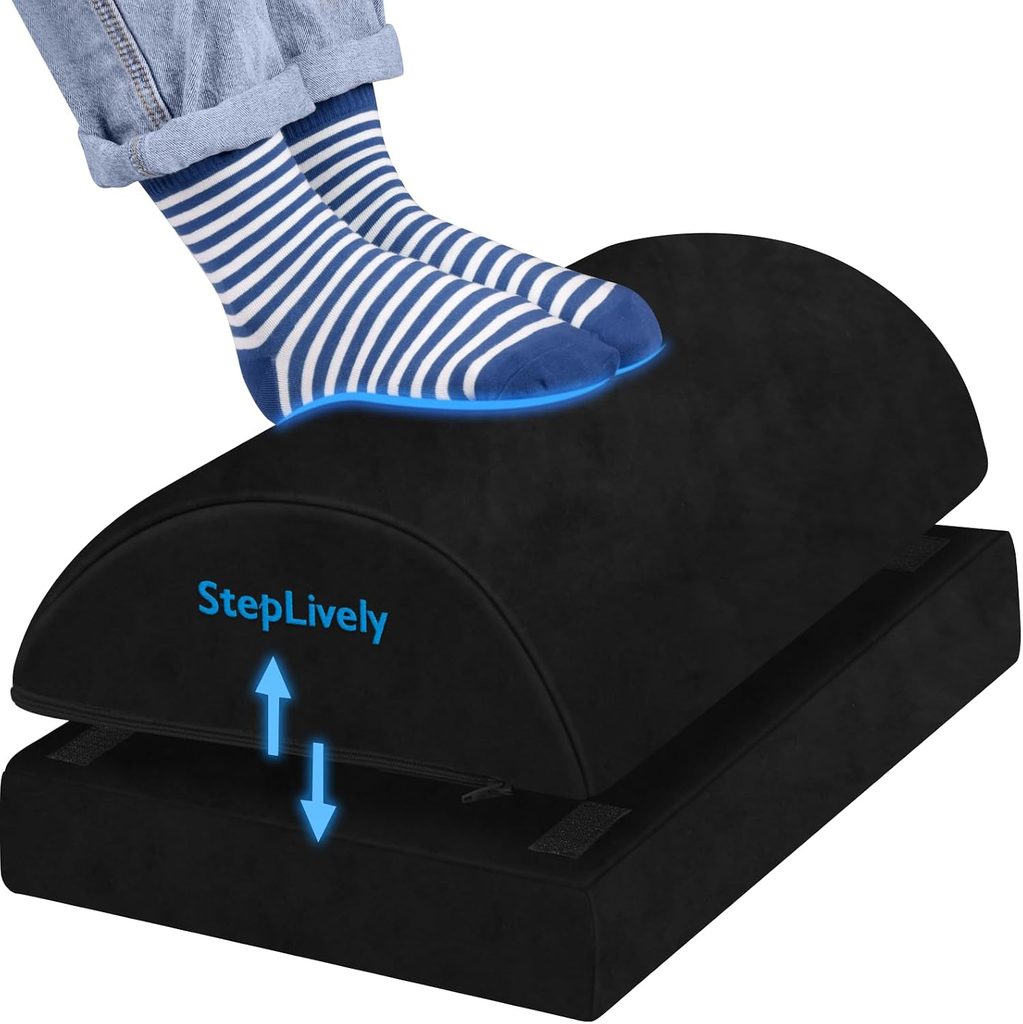
Quick Verdict: The StepLively is the cheapest footrest we could find, but it doesn’t compromise on quality. It has a removable layer, a washable velvet cover, and over 2,600 reviews on the listing with a 4.5-star rating. It’s a perfect buy for those who want to test the waters with a footrest and don’t want to spend a lot of money.
Best For: First-time footrest buyers and anyone who wants a simple, low-cost option.
Key Specifications:
- Dimensions: 9.8″ L x 16.1″ W x 5.7″ H (per listing)
- Layers: lower layer 2.0″ thick, upper layer 3.7″ thick (per listing)
- Materials: foam core with machine-washable velvet cover
- Non-slip bottom
- Flip-over use as a rocking pedal (per listing)
- Typical price: around $17 at the time of writing
What We Like:
- Very low price for a foam footrest with a washable cover
- Two heights through a removable lower layer
- Compact footprint suits small desks
- Large number of reviews gives a clearer picture of everyday use
What We Don’t Like:
- Maximum height is around 5.7″, which may be too low for people with a high desk and a non-adjustable chair
- Layers rely on hook-and-loop fasteners, which can feel less rigid than a one-piece design
- Not a premium material feel
Ergonomic Analysis: A low wide platform is useful when your feet are barely off the floor. For many shorties with a fixed height chair, adding a few inches might make a world of a difference on pressure from the seat edges. It won’t make a lot of difference for someone needing a larger lift.
Who Should Buy It? Buyers on a budget, people with a modest height gap, and anyone who wants to test whether a footrest suits them.
Who Should Skip It? People with very high desks or chairs, and anyone who wants a larger platform for a wide foot stance.
Value for Money: Excellent. At around $17 it is hard to argue with, as long as the height range matches your needs.
Check Price on Amazon3. ComfyInLove 3-Height Foot Rest: Best for Multiple Heights
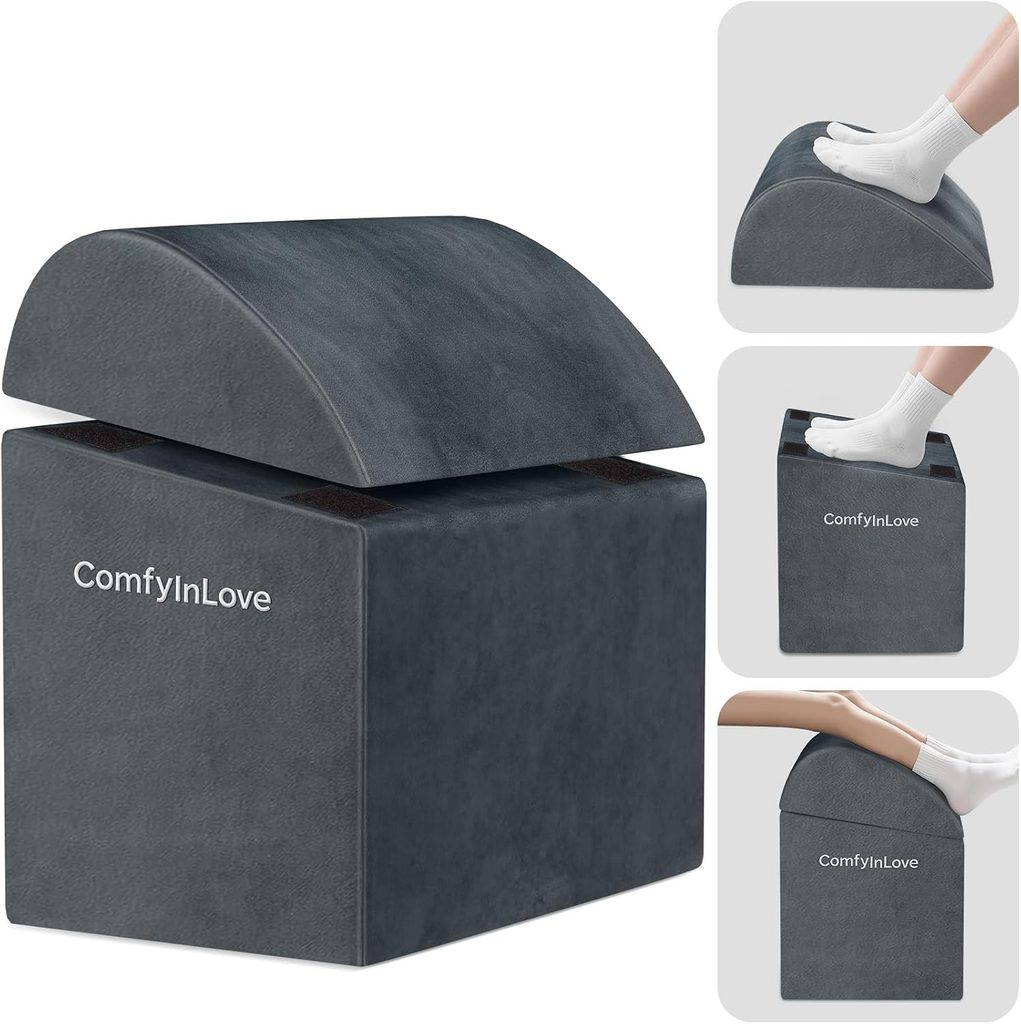
Quick Verdict: The ComfyInLove calls for three height options and fasteners to secure the layers together. The product is a perfect fit for those who constantly switch between sitting on the floor and perching on a stool or a barstool at the kitchen counter.
Best For: People who want to fine-tune height or use the same footrest at a desk, couch or bed.
Key Specifications:
- Three height settings through stackable parts (per listing)
- Material: high-density foam with a removable, machine-washable fabric cover
- Size listed as Medium; exact dimensions are not clearly stated, so check the current listing
- Non-slip bottom and four hook-and-loop fasteners (per listing)
- Typical price: around $33 at the time of writing
- Customer rating: 4.5 from 154 reviews at the time of writing
What We Like:
- Three height levels cover more setups than a two-tier design
- Washable cover with smooth zippers
- Fasteners help the parts stay together during adjustment
- Works around the house as well as at the desk
What We Don’t Like:
- Dimensions are not clearly listed, which makes it harder to plan for small spaces
- Fewer reviews than the top picks, so long-term durability is less proven
- Marketing copy leans heavily on relief claims, which no footrest can guarantee
Ergonomic Analysis: Fine height adjustment is extremely advantageous to users since a one-inch difference in height makes a significant difference in how your thighs settle on the seat. Three-way adjustability allows you to find a spot that best accommodates your feet while limiting knee lift.
Who Should Buy It? Shared workspaces, people still working out the right height, and anyone who likes flexible use.
Who Should Skip It? Buyers who want exact size information before ordering, or those who prefer a one-piece design.
Value for Money: Good. At around $33 it offers more height choices than the cheapest options.
Check Price on Amazon4. OpyTikar 3-Tier Foot Stool: Best for Larger Feet and a Wide Stance
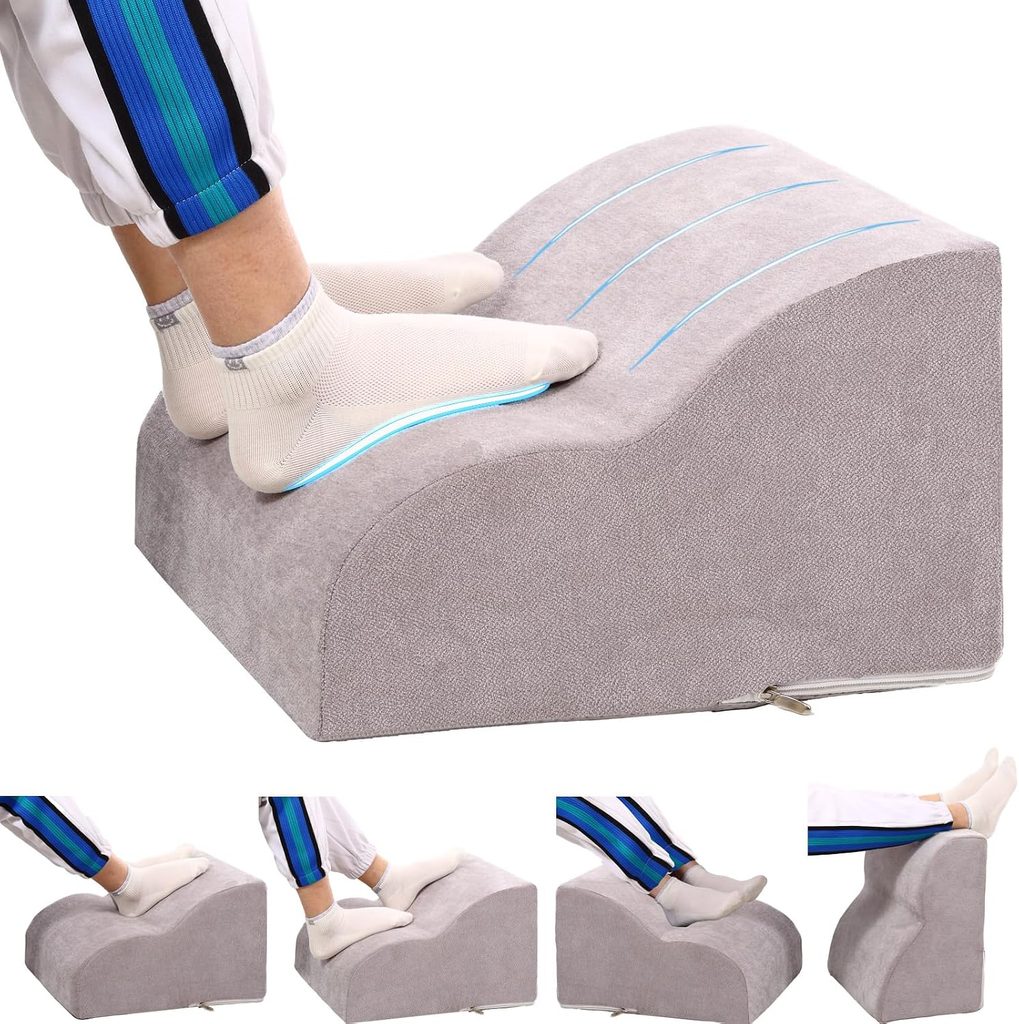
Quick Verdict: The OpyTikar gives you a big platform with three levels. If you like to spread your feet or change positions often, the extra room is the main selling point.
Best For: Users with larger feet, anyone who sits with feet apart, and people who want a generous surface.
Key Specifications:
- Dimensions: 15.7″ L x 15.7″ W x 9.8″ H (per listing)
- Weight: 2.8 pounds (per listing)
- Material: high-density sponge core with chenille fabric cover
- Triple height design
- Non-slip bottom, zip-off washable cover
- Typical price: around $39 at the time of writing
- Customer rating: 4.6 from 359 reviews at the time of writing
What We Like:
- Large base gives plenty of room for both feet
- Three tiers let you choose different positions
- Removable cover is machine washable
- Good rating with a reasonable review count
What We Don’t Like:
- The listing asks you to wait 48 to 72 hours after opening for the sponge to expand, which is inconvenient if you want to use it right away
- The 15.7″ square footprint takes real space under a small desk
- At 9.8″ tall, the top tier may be too high for many setups
Ergonomic Analysis: A wide platform supports changes in foot position, which helps avoid holding one static posture. It also works well if your chair has a fixed seat height that leaves your feet short of the floor.
Who Should Buy It? Larger-footed users, people with a roomy desk, and those who value space over compactness.
Who Should Skip It? Small-desk users and buyers who need to use the footrest on arrival.
Value for Money: Fair to good. At about $39 you pay for size and three levels.
Check Price on Amazon5. COZYDOU Twin-Contour Memory Foam Footrest: Best for Rocking and a Softer Feel
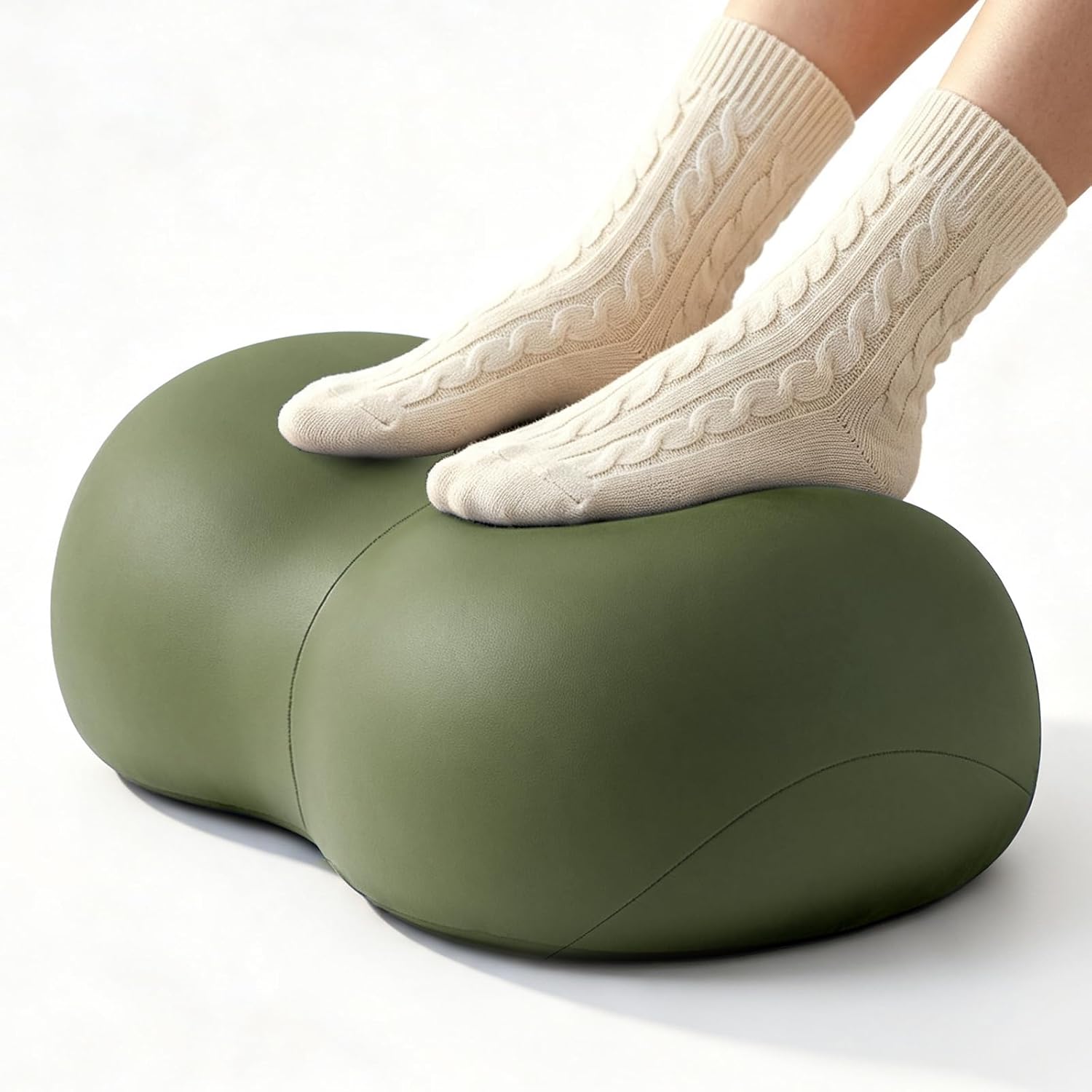
Quick Verdict: The COZYDOU foot warmer takes a slightly different approach, with two distinct peach-shaped contours, one for each foot, and utilizes slightly softer memory foam. It is less of a height increasing device and more of a luxury comfort foot warmer.
Best For: People who like a plush feel and want a footrest that doubles as a gentle rocker.
Key Specifications:
- Dimensions: 16.5″ L x 10.2″ W x 5.9″ H (per listing)
- Weight: 1.9 pounds (per listing)
- Material: memory foam with zip-off fabric cover
- Textured non-slip bottom
- Can be flipped for rocking (per listing)
- Typical price: around $39 at the time of writing
- Customer rating: 4.4 from 30 reviews at the time of writing
What We Like:
- Separate contours give each foot its own resting spot
- Softer feel for people who dislike firm foam
- Moderate footprint compared with the tiered models
- Flip-over rocking option
What We Don’t Like:
- Only 30 reviews at the time of writing, so there is limited long-term feedback
- Memory foam can compress with heavy daily use more than firm high-density foam
- Fixed height, so it will not suit people who need a taller or adjustable platform
Ergonomic Analysis: Because each foot has its own contour, the design encourages a slightly more natural foot placement than a flat shelf. Softer foam suits barefoot or sock use. The main trade-off is that it offers less stable support than firmer designs.
Who Should Buy It? Comfort-first buyers with a moderate height gap who want to rock their feet occasionally.
Who Should Skip It? Anyone who wants a firm base, a multi-height design or a product with a long track record.
Value for Money: Reasonable, but I would want more review history before calling it a bargain.
Check Price on Amazon6. XYRONICA Under Desk Foot Rest: Best for Portability
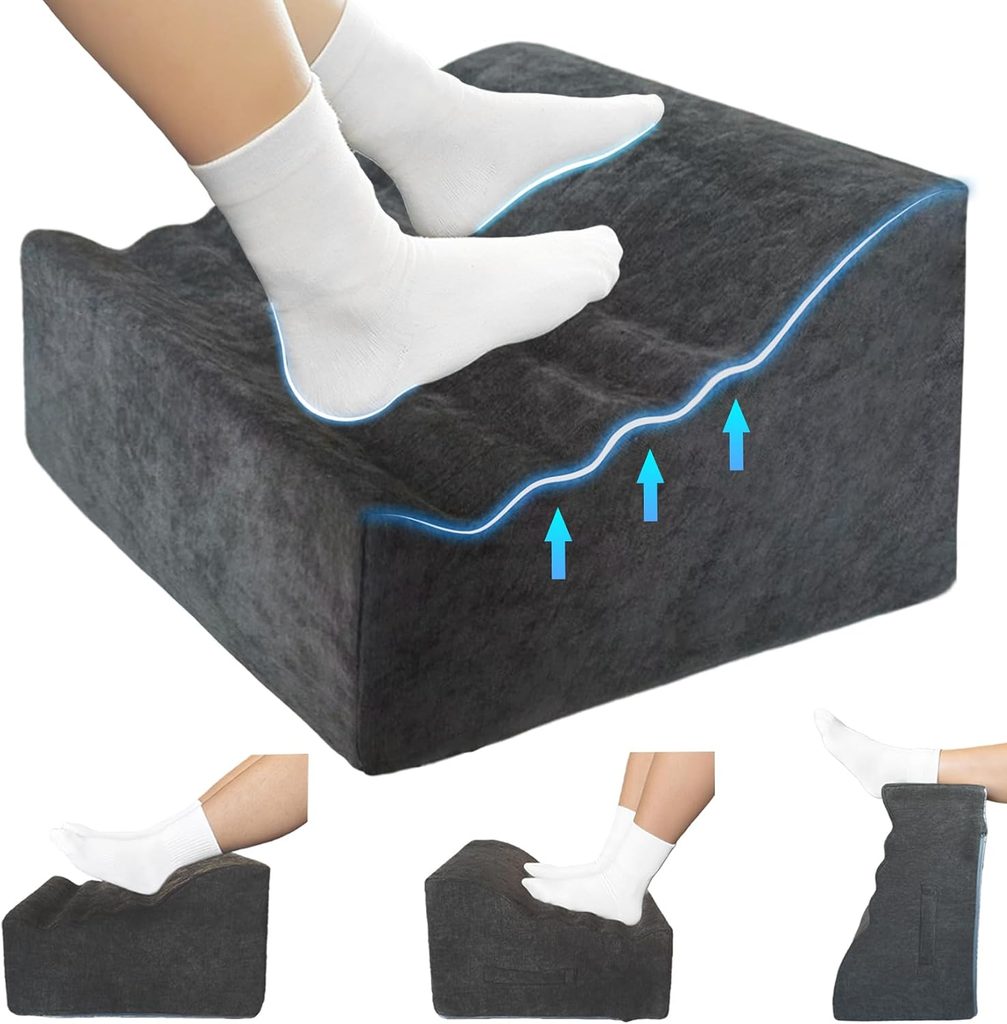
Quick Verdict: The XYRONICA stands out for its side handle and wave-like textured surface. It is easy to move between rooms and offers a tilted, double-layer shape.
Best For: People who move their footrest between a desk and a couch, or who like a textured surface under their feet.
Key Specifications:
- Size: 15.7″ x 15.7″ x 9″ (per listing)
- Material: high-density sponge with chenille fabric cover
- Side handle and double-layer height and tilt design
- Non-slip base, removable washable cover
- Vacuum sealed on delivery; the listing says to allow 48 to 72 hours to expand
- Typical price: around $37 at the time of writing
- Customer rating: 4.5 from 73 reviews at the time of writing
What We Like:
- Handle makes it easy to carry
- Textured top may feel pleasant for barefoot use
- Curved shape helps cradle the heel
- Removable cover for cleaning
What We Don’t Like:
- Very similar in size to the OpyTikar, so it offers less differentiation if you only need a large platform
- Fewer reviews than the top picks
- Weight is not clearly listed, so check the page before buying
Ergonomic Analysis: The tilted surface helps keep the heel supported, and the texture adds sensory variation. Both are comfort features rather than ergonomic necessities.
Who Should Buy It? Buyers who value portability and a textured feel.
Who Should Skip It? People who need a small footprint or a very firm, flat surface.
Value for Money: Fair. The handle and texture are nice touches, but they are not essential.
Check Price on Amazon7. GOOYIAM 2-Height Foot Stool: Best for Taller Seat Heights
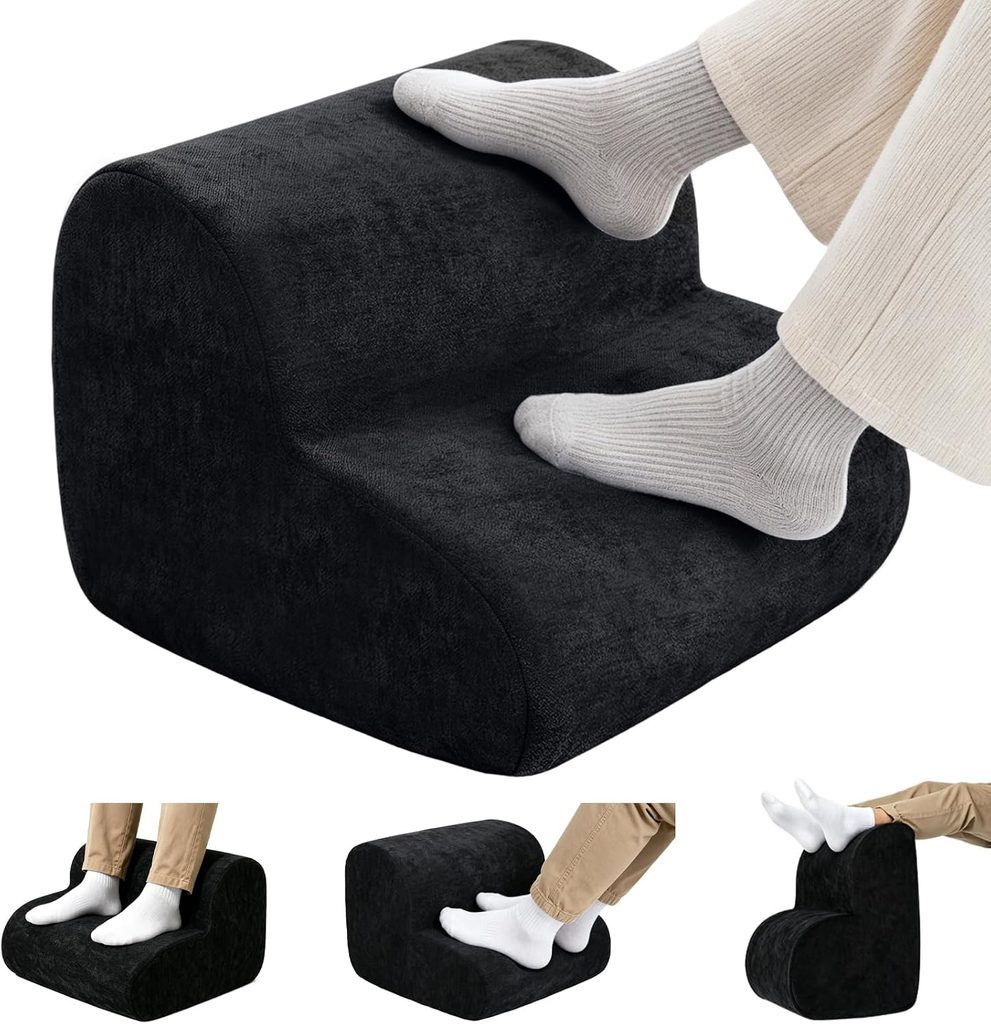
Quick Verdict: The GOOYIAM is available in a one-piece stepped design which means you don’t need to worry about separate pieces. At 11-Inch height, it fits better for those who have bigger height for their desk or chair.
Best For: Users with a high desk, a high fixed chair or a larger gap between feet and floor.
Key Specifications:
- Dimensions: 15.7″ L x 15.7″ W x 11″ H (per listing)
- Material: polyester chenille cover over high-density sponge
- One-piece two-tier structure
- Metal zipper and rubber grip dots on the base (per listing)
- Vacuum packed; listing says allow 24 to 48 hours to expand
- Typical price: around $39 at the time of writing
- Customer rating: 4.9 from 69 reviews at the time of writing
What We Like:
- No separate layers or fasteners to adjust
- Tall enough for higher seating positions
- Metal zipper may hold up better to washing than plastic
- Very high average rating
What We Don’t Like:
- Very high rating on a small number of reviews, so I would not treat it as proven yet
- At 11″ tall it is too much for most people with a standard setup
- Listing copy uses strong pain relief language that we cannot verify
Ergonomic Analysis: A tall footrest is useful only if your feet are well off the floor. If you are already close to the ground, a high platform can push your knees upward and put pressure on the back of your thighs.
Who Should Buy It? People with a high desk or a chair that cannot be lowered.
Who Should Skip It? Most people with adjustable chairs, and anyone with limited under-desk space.
Value for Money: Good if you really need the height. Otherwise a smaller footrest is a better fit.
Check Price on AmazonComparison Table
| Product | Best For | Type | Key Ergonomic Feature | Rating |
|---|---|---|---|---|
| ErgoFoam Adjustable | Best overall | Arched, rocker | Firm wide arch | 4.7/5 |
| StepLively 2-Height | Budget | Two layers | Compact, low height | 4.4/5 |
| ComfyInLove 3-Height | Flexible heights | Stackable | Three height settings | 4.4/5 |
| OpyTikar 3-Tier | Wide stance | Three tiers | Large 15.7″ platform | 4.5/5 |
| COZYDOU Twin-Contour | Soft rocking | Memory foam | One contour per foot | 4.2/5 |
| XYRONICA Under Desk | Portability | Double layer, tilt | Side handle, textured top | 4.3/5 |
| GOOYIAM 2-Height | Tall seating | One-piece tiers | 11″ maximum height | 4.3/5 |
Which Footrest Should You Buy?
Choose the ErgoFoam if you want the safest all-round pick with firm support and a strong review record.
Choose the StepLively if you want the lowest price and only need a modest lift.
Choose the ComfyInLove if you want three height settings and a footrest you can use around the house.
Choose the OpyTikar if you have larger feet or prefer a wide stance and have the desk space for it.
Choose the COZYDOU if you like a soft feel with separate foot contours and want a rocking option.
Choose the XYRONICA if you will move your footrest often and like a handle and textured surface.
Choose the GOOYIAM if your desk or chair sits high and you need an 11-inch platform.
Common Mistakes When Buying a Footrest for Home Office Use
- Buying the tallest one “to be safe.” Too much height raises the knees above the hips and can press on the back of the thighs.
- Ignoring floor type. A footrest that works on carpet can slide on hardwood or tile.
- Skipping measurements. Check the space under your desk, including chair base and cables.
- Trusting star ratings alone. A 4.9 average from under 100 reviews tells you less than a 4.7 average from thousands.
- Believing health claims in listings. Footrests may help comfort, but no listing can promise pain relief.
- Forgetting the rest of the setup. If your desk or chair is badly mismatched, a footrest is only a partial fix.
- Not allowing foam to expand. Several listings ask for 24 to 72 hours after unpacking, so do not judge firmness on day one.
- Never changing position. Even a good footrest works better if you move your feet and take regular breaks.
Best Practices for Using a Footrest at Your Home Office Desk
- Set your chair first. Adjust seat height so your forearms are comfortable at the keyboard, then add a footrest if your feet no longer reach the floor.
- Aim for supported feet and relaxed knees. Your knees should sit near a comfortable right angle without your thighs being squeezed.
- Leave room behind the knees. You should be able to fit a couple of fingers between the seat edge and the back of your knees.
- Change foot position often. Alternate between flat, slightly angled and rocking positions if your footrest allows it.
- Take movement breaks. The CDC’s NIOSH workplace resources include general guidance on movement and posture variation at work.
- Wash the cover regularly. Footrests collect dust, skin oils and floor debris.
Alternatives Worth Considering
If none of the seven products above feel like the right fit, our Best Under-Desk Footrests 2026 roundup has a broader selection ranked across comfort, adjustability and price.
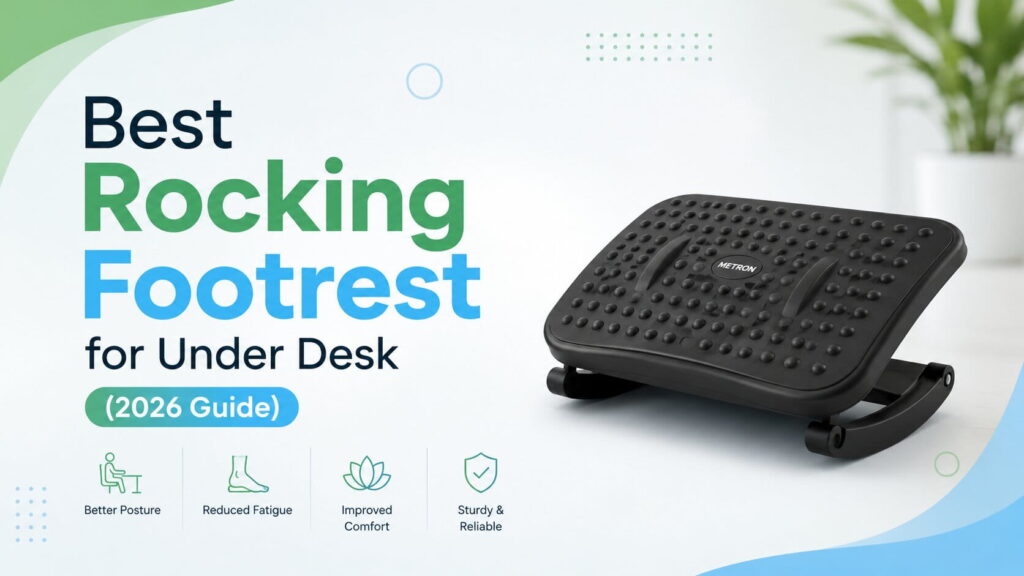
Readers who are looking for rocking products, visit our Best Rocking Footrest for Under Desk can assist you with its specific return.]
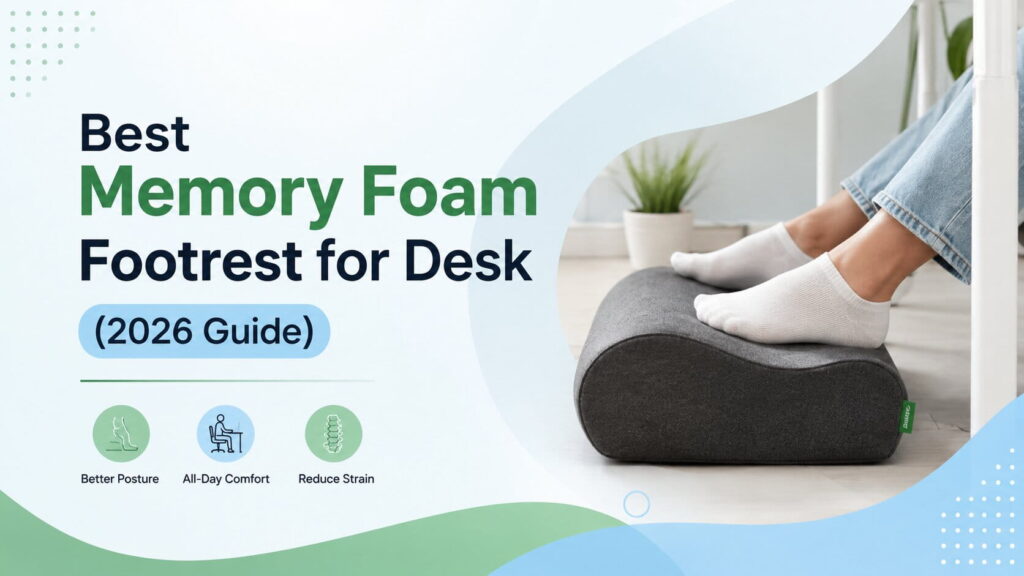
Readers who love memory foam, Our Best Memory Foam footrest can facilitate them.
If you are facing back pain, Our Footrests for Back Pain can provide you with its niche ranking of footrests.
Readers who are looking for footrests for gaming set up, Our Best Footrests For Gaming can help them.
FAQ
Do footrests help with posture?
A footrest may help you sit in a more supported position if your feet do not reach the floor. It gives the legs a stable base and can reduce pressure on the front of the thighs. It does not replace a well-fitted chair and desk, and it will not fix every posture problem.
Do footrests help circulation?
A footrest may encourage small foot and ankle movements, especially rocking models, which can help you avoid holding one position for hours. It is not a medical device. If you notice persistent swelling, numbness or pain in your legs, speak with a healthcare professional.
What height should a footrest be?
It should fill the gap between your feet and the floor so your knees sit at a comfortable angle, roughly level with or slightly below your hips. Many people need between about 2 and 6 inches. If your feet already rest flat, you probably do not need one.
How do I choose a footrest for a desk?
Start with your height gap, then check footprint, firmness, floor grip and cover care. A firmer foam keeps its shape better, while multi-height models give flexibility. Measure the space under your desk before ordering, and read recent reviews rather than relying on the headline rating.
Is a footrest necessary for a desk?
No. If your feet rest flat on the floor with your knees at a comfortable angle, you do not need one. A footrest is most useful when your chair cannot go low enough, your desk is fixed and high, or you are shorter than average.
Can a footrest help lower back pain?
A footrest may improve comfort by supporting your feet and reducing pressure on the thighs, which can change how you sit. It is not a treatment for back pain. If your pain is persistent or severe, see a qualified healthcare professional.
Are rocking footrests good for you?
20R ocking footrests can encourage gentle foot and ankle movement, which some people find more comfortable than staying still. They are optional and a matter of preference. If rocking makes you shift your whole body or distracts you, a flat, stable model may suit you better.
What is the best footrest for short people?
Look for a footrest with at least two height options and a stable, non-slip base. The ComfyInLove and StepLively give flexible, lower heights, while the ErgoFoam is a solid firm choice. Measure your floor-to-knee gap first so you do not buy something too tall.
Can you use a footrest with a standing desk?
Yes, when you sit. For standing, many people use a mat or a rocking platform instead. A low, light footrest that is easy to slide out of the way works best, since you will move it often as the desk height changes.
How do I clean a memory foam footrest?
Most models in this guide have a zip-off cover that you can machine wash. Follow the care label on your specific product. Do not wash the foam core itself unless the manufacturer says it is safe, and let everything dry fully before reassembling.