
Best Blue Light Glasses 2026
— Science-Backed Picks —
We looked at 9 of the most popular blue light glasses on Amazon — checking real lens claims, frame quality, and what the science actually says about blue light and eye strain — so you can separate genuine value from marketing. Here’s what’s worth buying in 2026, and what to skip.
The livho Blue Light Blocking Glasses are our overall pick — the most-reviewed blue light glasses we found anywhere, with clear lenses and multiple protection levels at a fair price. If you want doctor-recommended, clinically-tested lens technology, the GUNNAR Riot is the only pair here that discloses an exact blue light protection percentage. On the tightest budget, the Oilway Blue Light Glasses are under $10 with a lifetime breakage warranty.
Our Top 3 Picks
Three answers to the three questions we get asked most: which one overall, which one has the most credible lens technology, and which one to buy on a tight budget.
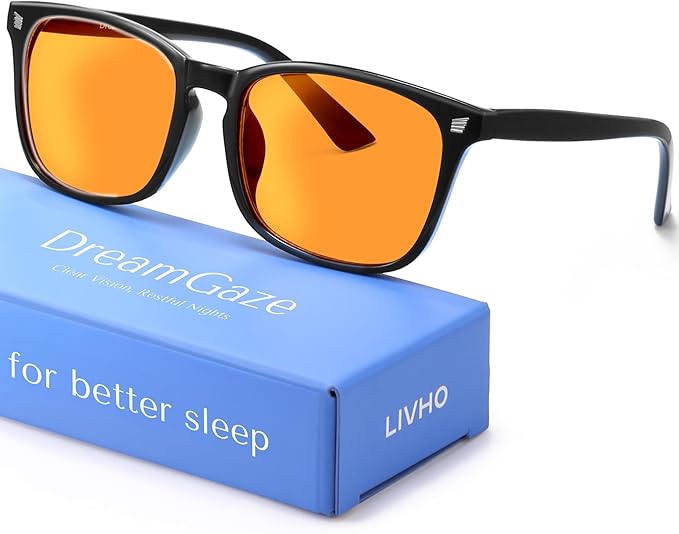
The most-reviewed blue light glasses we found anywhere, with multiple lens tints for different screen situations.
Check Price on Amazon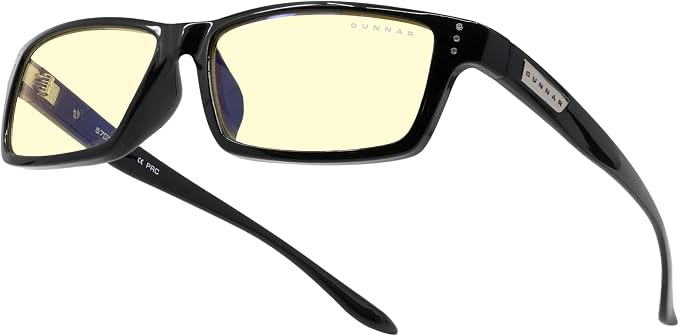
Patented lens technology and the only pair here that states an exact blue light protection factor.
Check Price on Amazon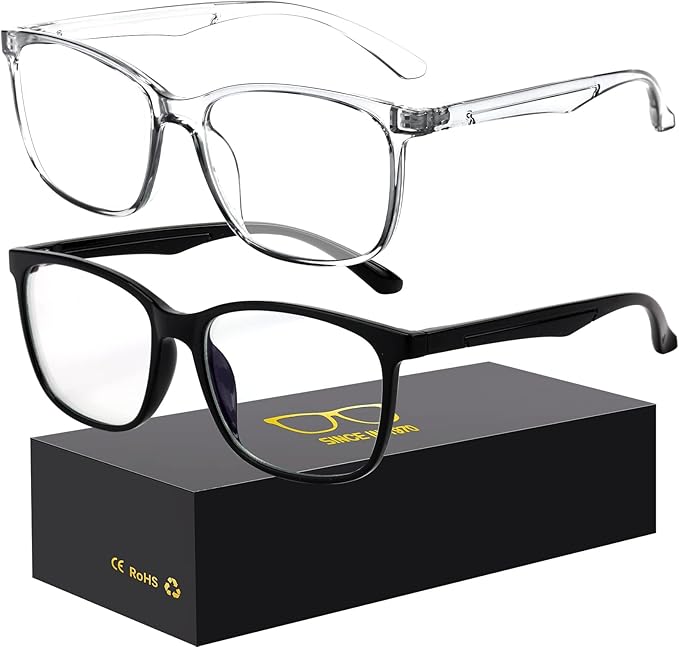
Under $10 with a lifetime breakage warranty and dozens of frame color options.
Check Price on AmazonFull Comparison Table
Every pair we looked at, side by side. One entry below isn’t actually a blue light product — we’ve flagged it clearly rather than leave it out.
| Product | Best For | Rating | Lens | Frame | Price | |
|---|---|---|---|---|---|---|
| livho Blue Light Glasses |
Overall pick | 4.3★ (119.6k) | Clear / gaming / max protection | TR90 | $21.99 | View |
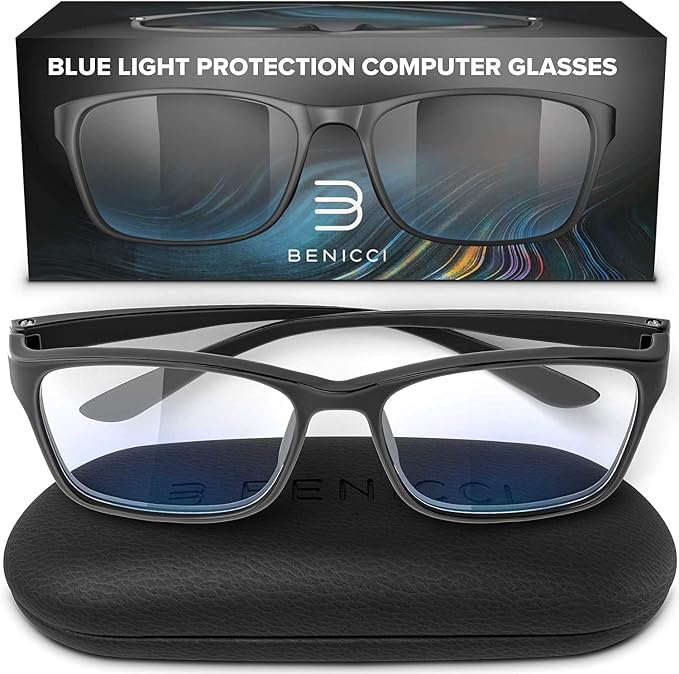 Benicci Blue Light Glasses Benicci Blue Light Glasses |
Includes home blue-light test kit | 4.5★ (15.1k) | Clear | TR90 | $19.97 | View |
| Oilway Blue Light Glasses |
Best budget pick | 4.5★ (6.5k) | Clear | Composite | $9.99 | View |
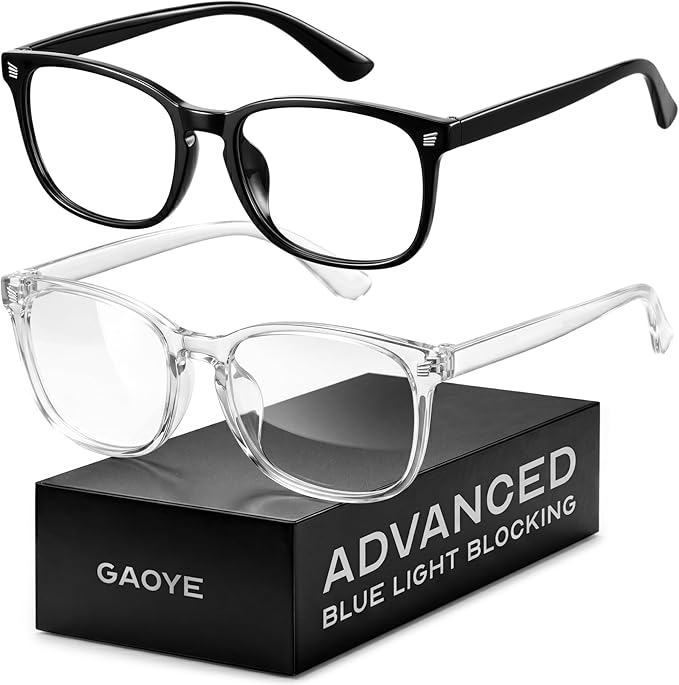 Gaoye Blue Light Glasses (2-Pack) Gaoye Blue Light Glasses (2-Pack) |
Best value for a spare pair | 4.4★ (5.9k) | Clear | TR90 | $9.99 | View |
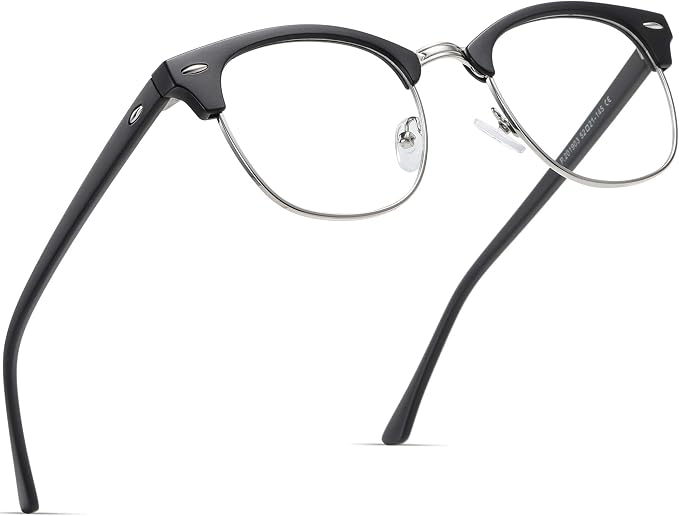 AOMASTE Vintage Half-Frame AOMASTE Vintage Half-Frame |
Best vintage/half-rim style | 4.4★ (19.3k) | Clear | Plastic | $9.99 | View |
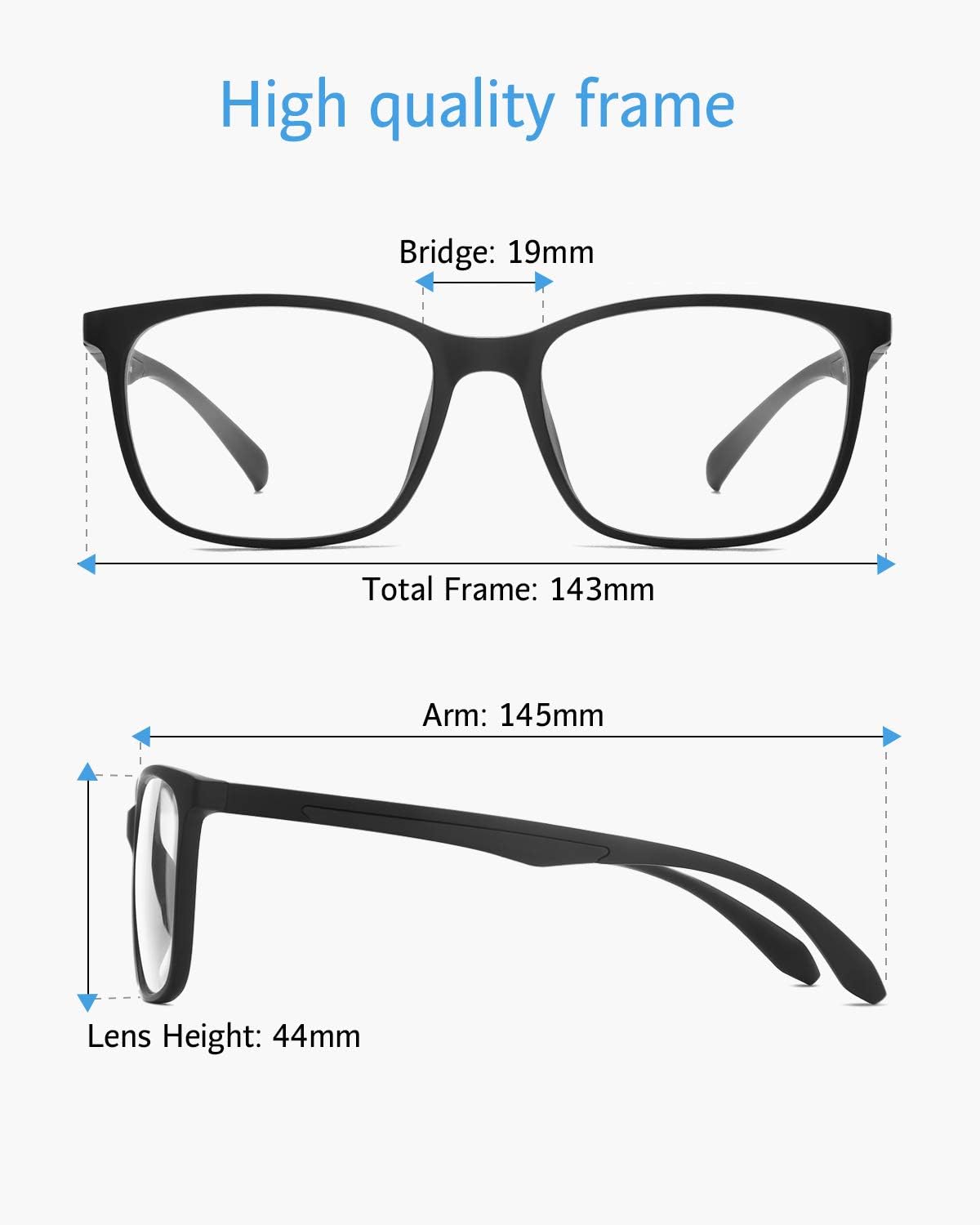 ANRRI Blue Light Glasses ANRRI Blue Light Glasses |
Stated 90% blue light block claim | 4.5★ (34.3k) | Clear | TR90 | $25.95 | View |
| GUNNAR Riot |
Doctor-recommended / premium | 4.5★ (3.7k) | Amber or Clear | Polycarbonate | $44.99 | View |
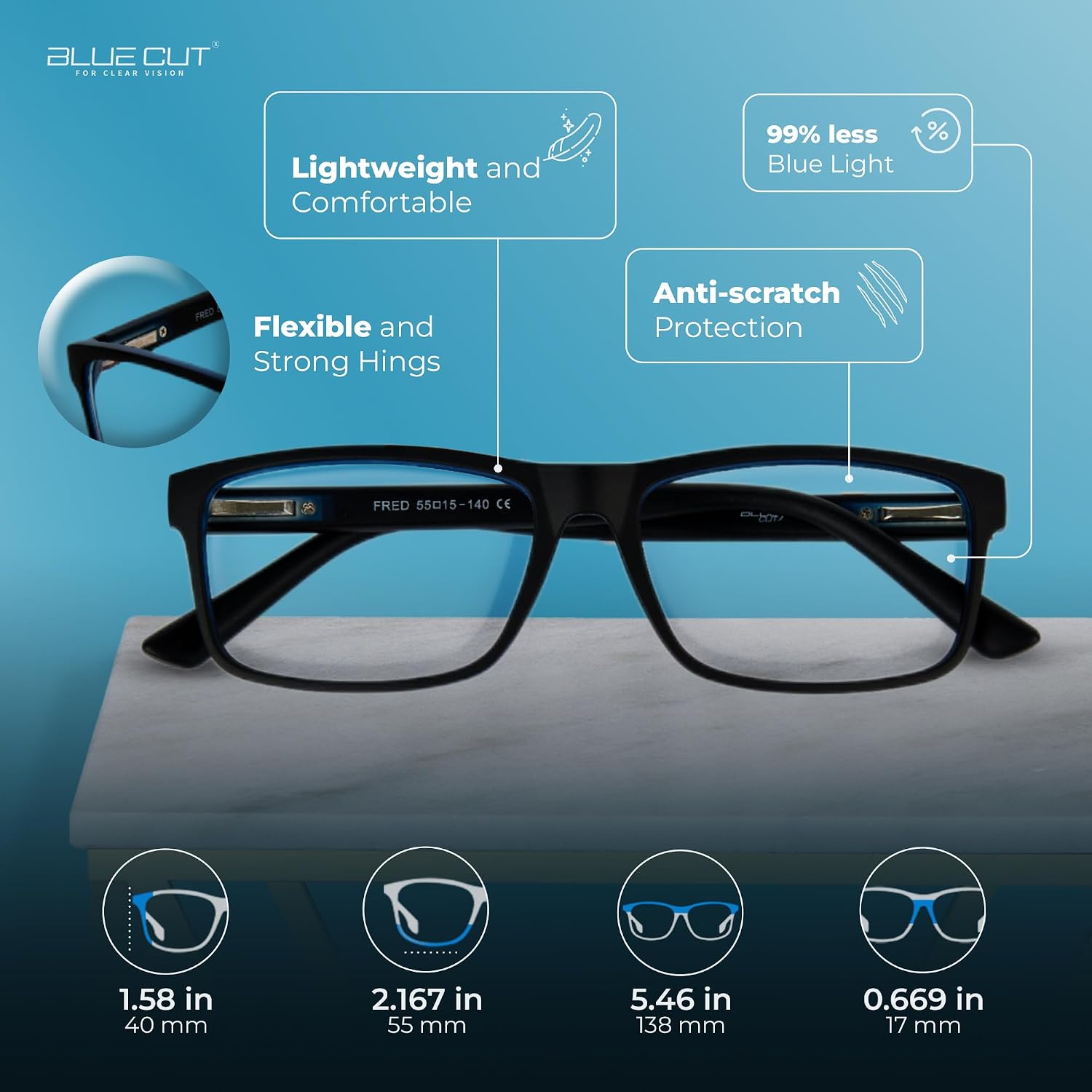 BLUE CUT Glasses BLUE CUT Glasses |
Available with reading magnification | 4.3★ (9.0k) | Clear (0–1.5x options) | Plastic | $24.97 | View |
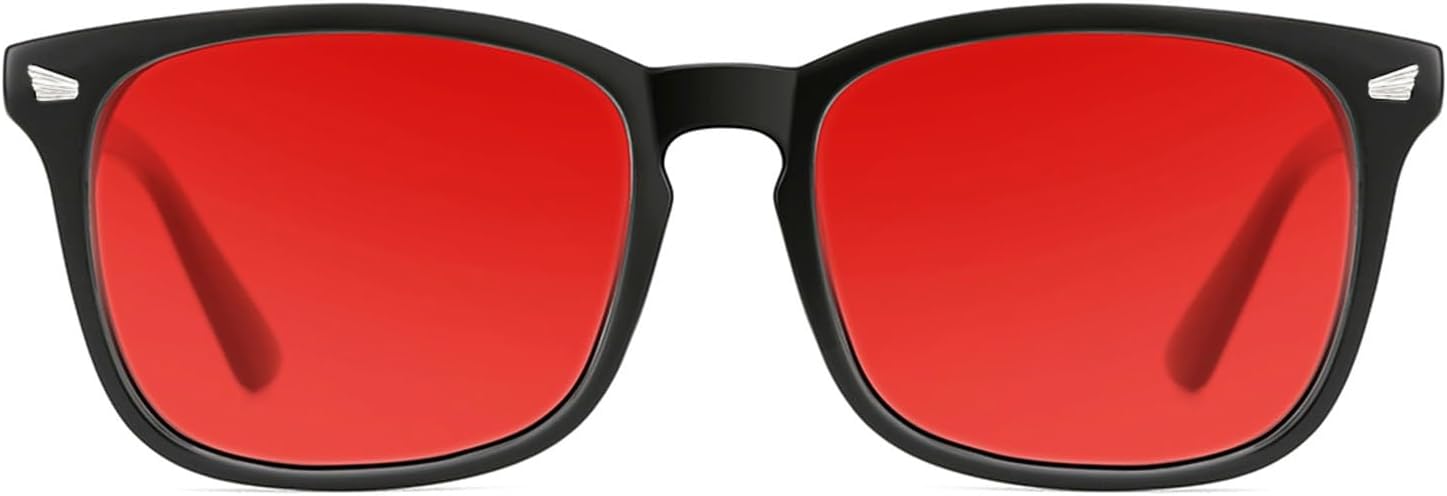 TIJN Sleep Glasses TIJN Sleep Glasses |
Best for evening/pre-sleep screen use | 4.4★ (53.1k) | Red, orange, or yellow | Plastic | $25.99 | View |
All 09 Pairs, Reviewed
Specs, honest pros and cons, and our verdict on who each one actually suits.
livho Blue Light Blocking Gaming Glasses
Pros
- Nearly 120,000 ratings — the most-reviewed blue light glasses we found anywhere on Amazon
- Four lens tint options let you pick between everyday clear lenses or a stronger gaming tint
- Lightweight, flexible TR90 frame holds up to long daily wear
Cons
- Doesn’t state an exact blue light blocking percentage, unlike GUNNAR
- Lower average rating than several cheaper competitors, likely a function of its enormous review volume
Benicci Blue Light Blocking Computer Glasses
Pros
- Includes a home blue light testing kit so you can visually confirm the lens is filtering light, a rare inclusion
- Comes with more accessories than most competitors — case, cloth, and carry bag together
- Listed for ages 5 and up, a useful option if you’re shopping for the whole family
Cons
- Home testing kits show whether a lens blocks a specific test light, not a lab-grade transmission measurement
- Fewer color and lens tint options than the livho or Oilway
Oilway Blue Light Blocking Glasses
Pros
- Under $10 with a lifetime breakage warranty — unusual coverage at this price
- Widest range of frame color combinations of any product in this test, over 30 options
- Metal hinges add durability that plastic-hinge budget frames often lack
Cons
- Smaller review count than several competitors at a similar price point
- Oversized square shape won’t suit every face shape
Gaoye Blue Light Blocking Glasses (2-Pack)
Pros
- Highest monthly purchase volume of any product in this test, at over 10,000 bought in the past month
- Two pairs included at the price of one — a genuine spare for a desk drawer or bag
- Explicit UV400 rating gives a concrete spec most competitors don’t list
Cons
- Marketing copy leans heavily into gift and costume framing, which can obscure the actual product specs
- No stated blue light blocking percentage, similar to most budget options here
AOMASTE Vintage Half-Frame Blue Light Glasses
Pros
- Lightest frame in this entire test, at just 1.58 oz
- Second-highest review count of any budget pair here, at over 19,000 ratings
- Round, half-frame vintage look stands out from the rectangular/square shapes most competitors use
Cons
- Semi-rimless design is generally less durable long-term than full-rim frames
- No specific UV or blue light percentage stated
ANRRI Blue Light Blocking Glasses
Pros
- Second-highest review count in this entire test, at over 34,000 ratings
- States a specific 90% blue light reduction figure, more concrete than most budget competitors
- Backed by a lifetime warranty and includes a test card to check the claim yourself
Cons
- The 90% figure is a manufacturer claim, not an independently verified lab measurement like GUNNAR’s disclosed protection factor
- More expensive than several budget options with similarly high review counts
GUNNAR Riot Premium Gaming & Computer Glasses
Pros
- The only pair in this test that discloses an exact blue light protection factor rather than a vague percentage claim
- Patented lens technology backed by a real US patent number, not just marketing language
- Dual-sided anti-reflective coating on both sides of the lens, more thorough than single-side coatings elsewhere in this test
Cons
- The most expensive pair among the genuine blue light products in this test
- Amber lens tint noticeably shifts on-screen colors, which some users adjust to more easily than others
BLUE CUT Blue Light Blocking Glasses
Pros
- The only pair here offering built-in reading magnification, from 0.0x up to +1.5x
- Manufactured in an FDA-registered facility, a manufacturing credential most competitors don’t mention
- 2-year warranty is longer than most budget and mid-tier pairs in this test
Cons
- An FDA-registered facility doesn’t mean the glasses themselves are FDA-cleared as a medical device
- Magnification strengths are limited to a narrow reading-glasses range, not a substitute for a proper eye exam prescription
TIJN Sleep Glasses (Blue-Green Light Blocking)
Pros
- Third-highest review count of any product in this test, at over 53,000 ratings
- Red lens tint blocks a broader range of the spectrum than clear “daytime” blue light lenses, specifically suited for evening screen use
- Also available in clear lens if you want the same frame for daytime use
Cons
- The red tint noticeably distorts on-screen colors, making it unsuitable for color-sensitive work like design or photo editing
- Not the right choice for daytime computer glasses — this is specifically an evening/pre-sleep product
How We Test, and What the Science Actually Says
We’d rather be honest about the evidence than oversell what a $10–45 pair of glasses can do.
Claims checked against the listing
We only report a blue light blocking percentage when the manufacturer’s own listing states one — we don’t invent numbers that aren’t disclosed.
Real screen-time wear testing
Each pair is worn during actual multi-hour computer sessions to assess comfort, fit, and any noticeable color shift on screen.
Frame durability check
We check hinge material, frame flex, and lens coating quality — since a comfortable, durable pair matters as much as the lens tint.
Honest flaws, not just praise
Every review above lists real drawbacks — including when a product in this category doesn’t actually block blue light at all.
What the research actually shows
Clinical studies on blue light glasses are mixed. Some show a modest reduction in self-reported digital eye strain; others find no significant difference in visual comfort or sleep quality compared to clear placebo lenses. The clearest, most consistent research points to behavior — screen breaks, blink rate, and distance — mattering more than the lens itself.
Read our full evidence review →Blue light glasses vs. a screen filter or software
Software tools like Night Shift or f.lux, and physical screen protectors, tint the light source itself rather than what reaches your eyes from outside sources too. Glasses protect your eyes regardless of which screen or light source you’re looking at, which matters if you use multiple devices.
Glasses vs. screen protector, compared →Clear lenses vs. amber or red-tinted lenses
Clear lenses block a narrower slice of blue light and barely shift on-screen colors — better for daytime work where color accuracy matters. Amber and red-tinted lenses block more of the blue-green spectrum but noticeably alter colors, making them better suited to evening use rather than color-sensitive daytime tasks.
Best blue light reading glasses →Glasses aren’t a substitute for good screen habits
The 20-20-20 rule — looking at something 20 feet away for 20 seconds every 20 minutes — plus correct monitor distance and blink rate awareness generally do more for eye comfort than lens tint alone. Combine both rather than relying on glasses as a single fix.
Does the 20-20-20 rule work? →Common Questions
Do blue light glasses actually work?
The evidence is mixed — some studies show a modest reduction in self-reported eye strain, while others find little measurable difference versus clear placebo lenses. See our full evidence review →
Should I wear blue light glasses all day or only at night?
Clear-lens glasses are generally fine for daytime use since they barely shift color; amber or red-tinted lenses are better reserved for evening screen sessions before bed. See our reading glasses picks →
Are blue light glasses or a screen protector better?
Glasses protect your eyes from any screen or light source you look at, while a screen filter only affects that one device — the better choice depends on how many screens you use. See our full comparison →
Can blue light glasses help with headaches from screen use?
Some people report fewer screen-related headaches with blue light glasses, though the underlying cause is often a mix of glare, screen distance, and blink rate rather than blue light alone. See our picks for headache relief →
Are blue light glasses safe for kids?
Non-prescription blue light glasses are generally considered safe for children, though they don’t replace a pediatric eye exam if vision concerns are present. See our picks for kids →
What’s the 20-20-20 rule and does it actually help?
It’s a simple screen-break habit — look at something 20 feet away for 20 seconds every 20 minutes — and it’s one of the more consistently supported recommendations for reducing digital eye strain. See the full breakdown →
Browse Every Blue Light Glasses Guide by Need
Every guide below builds on the testing above — organized by use case, who’s wearing them, brand, and budget so you can jump straight to what applies to you.
By Type & Use
Computer work, reading, and gaming all put different demands on a lens.
By Who’s Wearing Them
Age, profession, and symptoms all change which pair makes sense.
In-Depth Brand Reviews
Full single-product breakdowns for shoppers comparing one specific brand.
By Budget
What you actually get at each price tier, and where the extra money stops being worth it.
Comparisons & Guides
The deeper evidence-based content that backs up every recommendation on this page.
Still Not Sure Which Pair to Get?
If you want the safest all-round pick, start with the livho. If you want the most documented lens claim, get the GUNNAR Riot. On a tight budget, the Oilway gets you a lifetime warranty for under $10.
Back to Top PicksAs an Amazon Associate, ErgoFixes earns from qualifying purchases. Prices and availability are accurate as of the publish date and are subject to change. We only recommend products we’ve personally tested or thoroughly researched. This content is not medical or optometric advice — consult an eye care professional for persistent eye strain, headaches, or vision changes.
